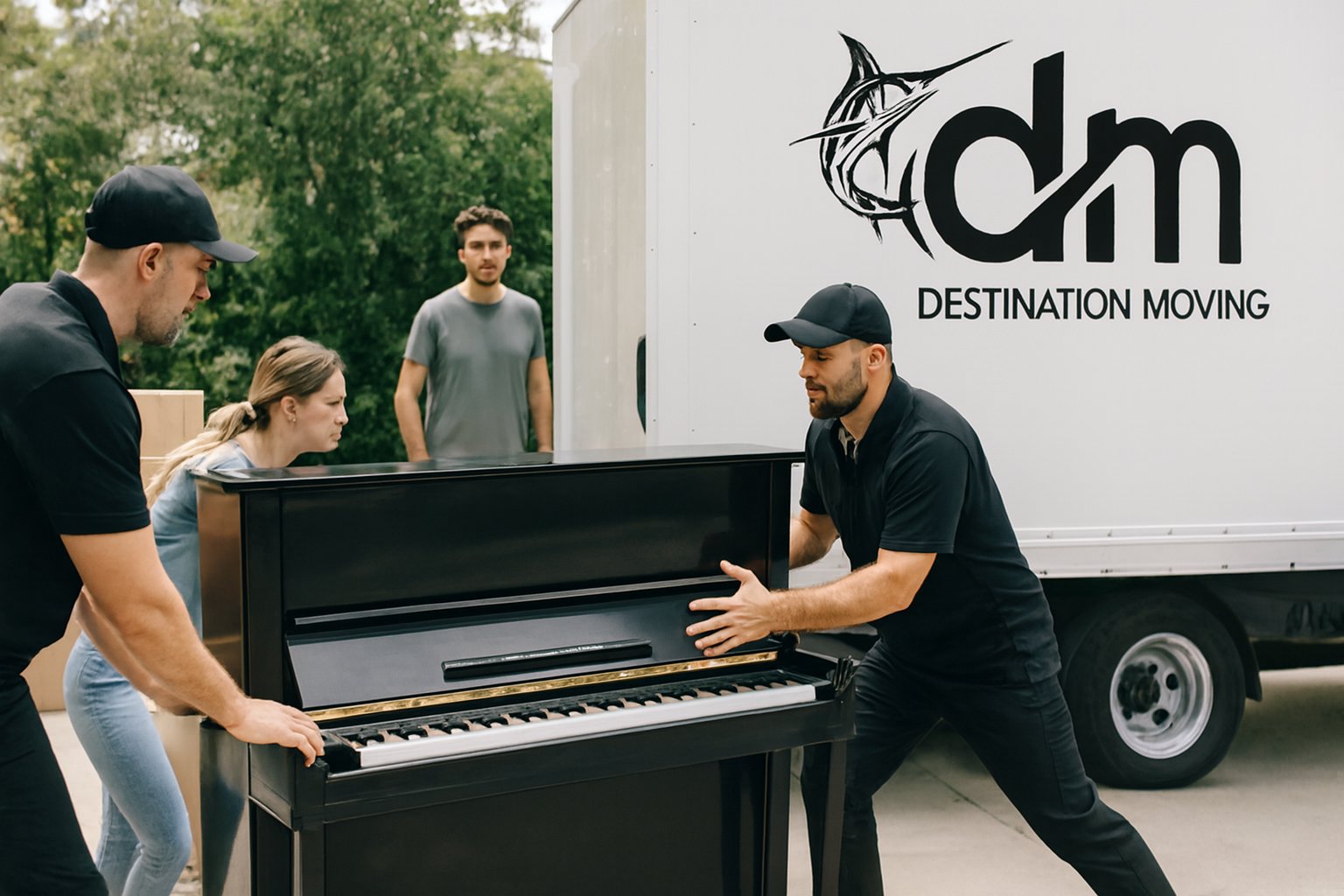
Moving a piano yourself can save you money on paper, but the real decision comes down to what your specific piano weighs, how many stairs and turns stand between it and the truck, and whether you or your friends are prepared to carry several hundred pounds of awkward, top-heavy weight without dropping it. For most upright pianos in a single-story home with a clear path, a careful DIY move with the right equipment is possible. For grands, stairs, tight doorways, or long-distance transport, professional piano movers are almost always the safer financial choice once you account for what a mistake actually costs.
This isn't a step-by-step how-to. It's a decision guide: the actual numbers, equipment costs, and risk factors that should tell you which side of that line your move falls on.
What Does It Actually Cost to Move a Piano Professionally?
Professional piano moving typically costs more than moving standard furniture because it requires specialized equipment, extra manpower, and liability coverage the movers carry in case something goes wrong. Local moves of an upright piano tend to sit at the lower end of that range, while grand pianos, long flights of stairs, or long-distance transport push the price up considerably.
The price difference between an upright and a grand isn't just about size. Grand pianos need to be disassembled (legs, pedal lyre, and sometimes the lid) and wrapped in a specific sequence, then rebuilt at the destination. That extra labor and expertise is baked into the quote. If you're comparing quotes, ask whether disassembly and reassembly are included, and whether the price changes if there's a flight of stairs on either end.
What Drives the Price Up or Down
- Piano type: spinet and console uprights are the cheapest to move; grand and baby grand pianos cost more due to disassembly.
- Stairs and doorways: each flight or tight turn typically adds to the labor estimate.
- Distance: a move across town is priced differently than a move across the state or country.
- Access at both ends: long carries from the truck to the door, gravel driveways, or elevators without service access all add time.
What Does DIY Piano Moving Actually Cost in Equipment?
Doing it yourself isn't free. A proper DIY piano move requires renting or buying a piano dolly (not a furniture dolly), moving straps, a ramp if you're loading into a truck, and enough moving blankets to fully pad the instrument. Add in a truck rental if you don't already have one, and the "free" DIY option often costs more than people expect before anyone's back gets involved.
A standard furniture dolly is not rated for the concentrated weight and shape of a piano and can tip or buckle under load. A piano-specific dolly (sometimes called a board or skid) distributes weight across the piano's frame correctly. If you're only moving a piano once, renting this equipment for a weekend usually costs a fraction of a professional quote, but you're also taking on 100% of the risk with none of the experience.
Is It Safe to Move a Piano Yourself?
Moving a piano yourself is safe only under specific conditions: a single flight or no stairs, a clear and wide path to the truck, at least three to four capable helpers, and the correct equipment. Outside of those conditions, the risk of injury or serious property damage rises quickly, and pianos are heavy enough that a mistake is rarely minor.
Uprights typically weigh several hundred pounds, and grand pianos can weigh considerably more, with weight distributed unevenly toward the keyboard end. That imbalance is what causes most DIY accidents: the piano tips forward or sideways mid-carry because the person supporting the heavy end loses their grip or footing. Common injury points include crushed fingers and toes, back strain from improper lifting, and falls on stairs when the piano's weight shifts unexpectedly.
Property damage is the other side of the risk. A piano that scrapes a stairwell wall, cracks a doorframe, or gouges hardwood floors can cost more to repair than the professional move would have cost in the first place. Homeowners insurance doesn't always cover moving accidents you caused yourself, while professional movers typically carry liability coverage for exactly this scenario.
Situations Where DIY Is Rarely Worth the Risk
- Any move involving a grand or baby grand piano, due to disassembly requirements.
- Stairs, especially with turns or landings.
- Narrow doorways, hallways, or tight stairwell clearances.
- Long-distance moves where the piano will be in transit for hours or days.
- A piano with sentimental or appraised value you aren't willing to risk.
How Do You Decide Which Option Makes Sense for Your Move?
The decision comes down to weighing the DIY cost (equipment rental plus your own time and physical risk) against the professional quote, then honestly assessing your access and manpower. If the gap in price is small relative to the piano's value and the difficulty of your specific move, hiring out is usually the better financial decision once potential damage or injury is factored in.
Start by getting an actual quote rather than guessing. Many piano owners are surprised that the professional price is closer to their DIY equipment costs than they expected, especially once a truck rental and gas are added to the DIY side of the ledger. A move that includes a full-service crew experienced in professional moving labor services also protects you from the liability of an injured helper on your own property.
If your piano is part of a larger household relocation, it often makes sense to fold the piano into your existing residential moving plan rather than treating it as a separate errand. This keeps scheduling simple and avoids paying for two separate trips or crews.
Questions to Ask Before You Decide
Before committing to either route, get clear answers on a few specifics that change the math significantly.
- Does the professional quote include stairs, long carries, and disassembly, or are those billed separately?
- Is the piano insured for its full value during a DIY move, and does your homeowners policy actually cover it?
- Do you have at least three physically capable helpers who can commit to the full move, not just the carry?
- Is this a one-time move, or will you need this equipment and expertise again?
If you answer any of these with uncertainty, that's usually a sign the professional option is worth the extra cost. For heavier specialty items beyond pianos, the same logic applies: our guide on moving a gun safe without injury walks through similar weight-and-risk tradeoffs if you're weighing multiple large items in the same move.
Whichever way you decide, don't leave the decision until moving day. Get quotes early, measure your doorways and stairwells in advance, and if you land on hiring it out, book far enough ahead that your piano move can be scheduled alongside the rest of your relocation instead of as a rushed afterthought.