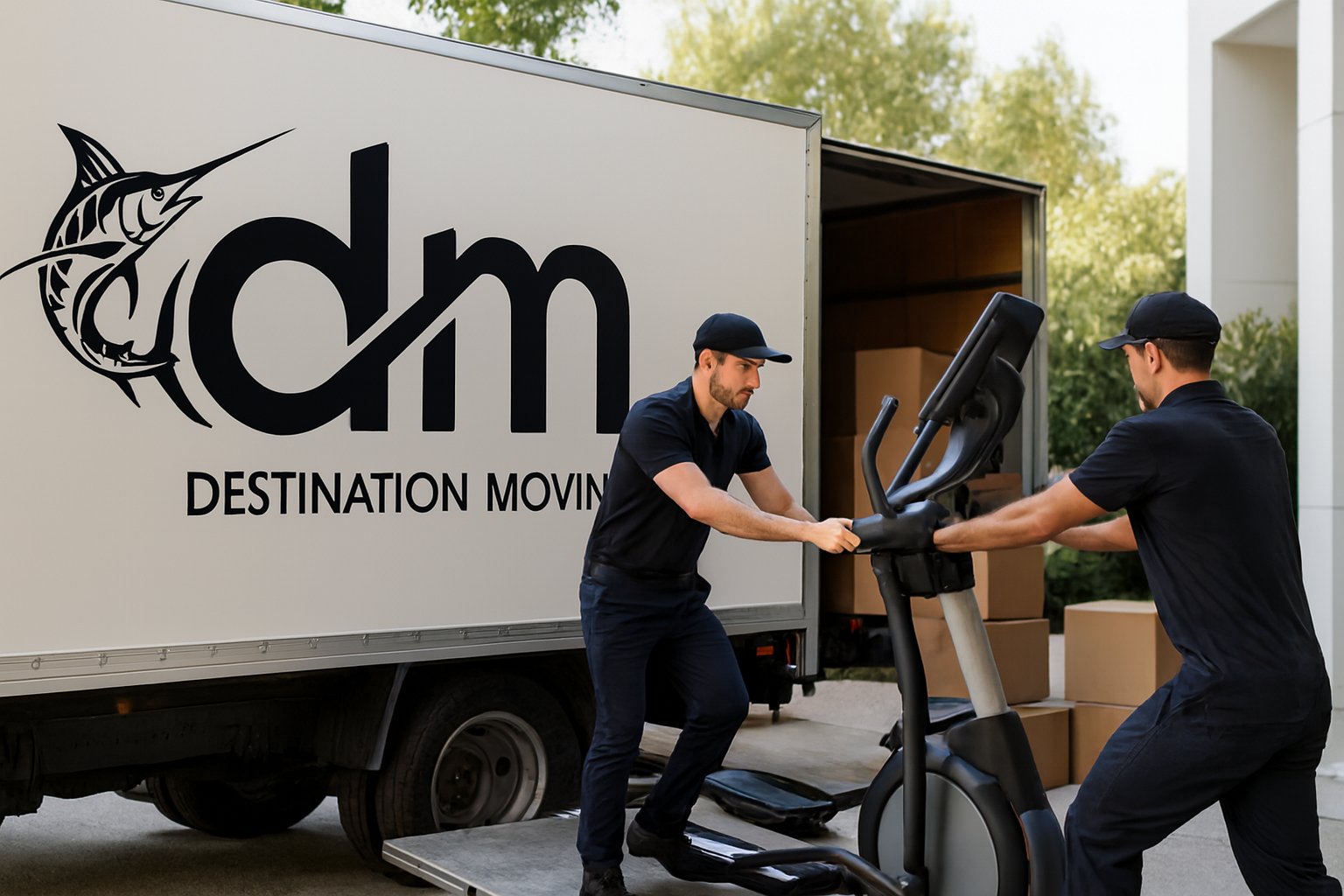
You move exercise equipment safely by draining or securing any fluids and electronics first, locking the moving parts so nothing shifts in transit, and carrying each machine upright on a proper dolly rather than dragging or tilting it. Treadmills and exercise bikes are not simple furniture: they contain motors, belts, and console wiring that can be thrown out of alignment by rough handling in a matter of minutes. The good news is that most damage is avoidable once you understand which parts of the machine are actually fragile.
This guide covers the two most common pieces of home gym cardio equipment, treadmills and exercise bikes (spin bikes, recumbents, and uprights), along with the general principles that apply to rowing machines and ellipticals as well. If you are also packing weights, racks, or benches from the same room, that involves a different set of steps entirely.
Why Is Moving a Treadmill Different From Moving Regular Furniture?
A treadmill is different because it is a precision machine, not a static object. The running belt has to stay at a specific tension and alignment over the deck, the motor housing is sensitive to shock, and the frame is often too long and awkwardly balanced to carry safely without help.
Tilting a treadmill onto its side without folding or locking it first can stress the belt unevenly, and dragging it across a floor puts direct strain on the rollers. Exercise bikes carry a smaller version of the same risk: the flywheel and resistance mechanism can be knocked out of calibration if the bike is dropped or laid on its side without support.
How Do You Prep a Treadmill Before Moving It?
Prepping a treadmill means folding the deck if it has a folding frame, locking that fold in place, and removing or securing the console before anything gets carried out the door. Skipping this step is the single most common reason a treadmill arrives with a cracked display or a bent hinge.
- Unplug and coil the power cord and tape it to the frame so it cannot catch on a doorway or stairwell.
- Fold the deck if your model supports it, and engage the safety pin or hydraulic lock so it cannot spring open in the truck.
- Remove the console if it detaches easily, or wrap it in a moving blanket and tape the wrap snugly if it does not.
- Check the manual for a "transport lock" on the belt or motor housing. Many treadmills have one specifically for this purpose, and it is often overlooked.
- Take a photo of the wiring where the console connects to the base, in case anything needs to be reconnected later.
How Do You Prep and Transport an Exercise Bike?
Exercise bikes need less disassembly than treadmills but still require the pedals, seat, and handlebars secured so they do not swing or scrape against other items. Spin bikes and uprights are top-heavy, so they need to be strapped upright rather than laid flat whenever the truck has room.
Remove or tighten the seat and handlebar posts to their lowest, most compact setting. If the pedals fold in, fold them; if they do not, wrap each pedal individually so the crank arms are protected from scuffing against other boxes. Recumbent bikes, being lower and heavier at the base, can usually be walked on a dolly like a small appliance rather than carried by hand.
What Tools Actually Help Here?
A furniture dolly or hand truck rated for at least 300 pounds handles most home cardio machines. Ratchet straps hold the folded deck or bike frame against the dolly so it cannot shift, and a couple of moving blankets protect the console and any exposed metal from scratching against a truck wall or other furniture.
How Do You Get a Treadmill Down Stairs or Through Tight Doorways?
Getting a treadmill through a tight space comes down to measuring before you lift, not improvising once you are stuck halfway through a doorway. Fold it first if possible, since a folded deck is often narrow enough to clear a standard doorway that an unfolded one will not.
On stairs, one person should always be below the machine to control its descent, never above pushing from behind. A stair-climbing hand truck reduces the physical strain considerably and is worth borrowing or renting for anything over roughly 150 pounds, which covers most full-size treadmills.
Should You Hire Professional Movers for a Home Gym?
Hiring movers makes the most sense when your equipment is heavy, awkward to fold, or has to travel down stairs or around tight corners, since that is exactly the combination that leads to injuries and cracked consoles. A treadmill alone can weigh 200 to 300 pounds, and a commercial-grade or incline model can weigh considerably more.
If you are moving several pieces of gym equipment along with the rest of a household, coordinating them with the rest of your residential move tends to be more efficient than treating the gym as a separate job. For loading heavy, bulky machines onto a truck without damaging floors, walls, or the equipment itself, a team that offers loading and unloading assistance can handle the parts of the process where injuries and dropped equipment are most likely to happen.
What Should You Check Once the Machine Is at the New Location?
Before you plug anything back in, walk around the machine and confirm the frame sits level and nothing shifted during transport. Reconnect the console using the photo you took earlier, then re-tension or realign the belt on a treadmill according to the manufacturer's instructions before running it at full speed.
Give the machine a short, low-speed test run rather than jumping straight into a workout. A belt that drifts to one side, a console that flickers, or unusual noise from the motor are all signs something needs adjusting before regular use resumes. If you are unpacking a full room of equipment at once, pace yourself the same way you would with any other residential moving project: get the heaviest items placed first, then work through the smaller pieces.
Moving cardio equipment is one part of setting up a functional home gym in a new space. If you are relocating from further away and want the whole process handled with the same care, our long-distance moving team is equipped for oversized and awkward items, not just standard household boxes.