Moving houseplants successfully comes down to three things: watering and pruning them a few days ahead, boxing them so stems and soil stay put without trapping heat or moisture, and controlling the temperature they ride in. Plants are not fragile the way a wine glass is fragile, but they are sensitive in a different way. Sudden darkness, temperature swings, and dry roots stress them out fast, and a plant that looks fine on move-out day can drop half its leaves a week later.
That delayed reaction is why so many people assume their plants just do not travel well. In most cases the plant did not fail, the prep did. Below is what actually keeps a houseplant collection alive through a move, whether you are going twenty minutes across town or several states away.
How far ahead should you prep plants before a move?
Start about a week before moving day. Water on a normal schedule, but skip fertilizing, since fresh fertilizer salts combined with root disturbance can burn roots that are already about to be stressed. Trim any dead or damaged leaves so the plant is not wasting energy on tissue it does not need.
If a plant is pot-bound or clearly overgrown, this is not the week to repot it. Repotting and moving are both forms of shock, and stacking them on top of each other is one of the most common ways people lose a plant they thought they were protecting. Save any repotting for two to three weeks after you arrive, once the plant has settled.
Check for pests before you pack anything
Give leaves and soil a close look for gnats, mites, or scale. Bringing an infested plant into a new home, or worse, into a moving truck alongside other people's belongings on a shared load, is worth avoiding. A quick soil rinse or insecticidal soap treatment a few days out solves most minor issues.
How do you pack plants for a move without breaking stems or spilling soil?
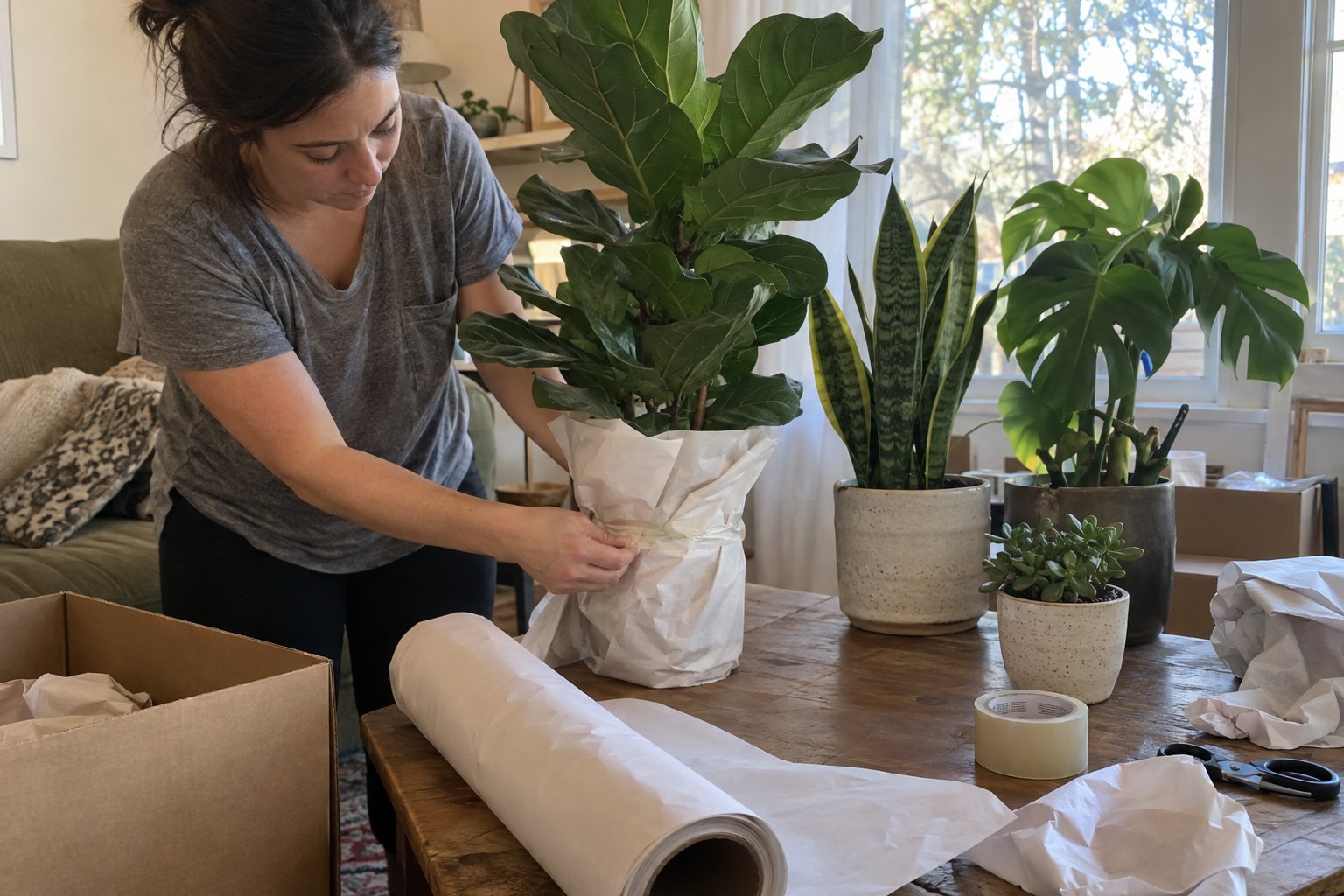
Pack each plant in its own ventilated box sized just a bit larger than the pot, with the container secured so it cannot tip or slide during transit. Soil should be lightly damp, not soaked, and the pot itself needs a way to stay upright even when the box gets jostled.
- Slip a plastic bag loosely over the pot (not the foliage) and tie it under the leaves to keep soil from spilling if the pot tips.
- Use a box just tall enough for the plant, or cut flaps down to size, so branches are not crushed against cardboard.
- Wedge the pot in place with crumpled paper so it cannot roll around, and cut small air holes in the sides of the box.
- For tall or top-heavy plants, tie stems loosely to a stake with soft twine so they do not snap under their own movement.
- Skip watering the morning of the move. Slightly dry soil is lighter and less likely to turn into mud that suffocates roots.
Leave the top of the box open if you can manage it, since plants need at least some airflow and indirect light even for a short trip. Fully sealed boxes are fine for an hour or two but start causing problems if the plant sits inside longer than that.
What to do with hanging plants and vines
Take hanging plants down from their hooks and lay trailing vines in a shallow, open box rather than letting them dangle loose. Coiling long vines too tightly can snap them at the base, so loop them gently in wide circles instead.
Is it safe to transport plants in a car versus a moving truck?
A climate-controlled car is almost always safer for plants than the back of a moving truck. Trucks are not temperature-regulated, and a plant riding for hours in a hot or cold cargo area is far more likely to arrive wilted, scorched, or frost-damaged than one riding in the cab with you.
If you are working with a moving crew, plan to transport plants yourself, in your own vehicle, even if everything else goes on the truck. This is one of the few categories where DIY handling beats professional loading, simply because timing and temperature control matter more than lifting strength. Our residential moving teams are used to this split and will happily load everything else so your car has room for the plant boxes.
Inside the car, keep plants out of direct blasting AC or heat vents, and crack a window slightly on long drives for airflow. Never leave plants in a parked, closed car for more than a few minutes, since interior temperatures climb or drop fast enough to damage foliage within fifteen to twenty minutes in extreme weather.
What about moving plants long distance across state lines?
Long-distance plant moves add two problems short trips do not have: extended time without light or fresh air, and, in some cases, legal restrictions on crossing state lines with live plants and soil. Before a long-distance move, it is worth checking whether your destination state has agricultural inspection rules, since some states restrict certain plants or require soil-free transport to prevent pests and invasive species from spreading.
For trips longer than a day, plants generally do better making the trip in a personal vehicle with overnight stops in a cool, shaded spot rather than sitting in a hot trunk or a moving container overnight. If a plant is sentimental but not essential, some people find it easier to take cuttings and regrow them at the destination instead of moving a large, mature specimen across the country. If you are already planning the broader logistics of a cross-country relocation, it helps to line up your long-distance moving service early so you know your timeline and can plan plant care around driving days rather than around the movers.
How do you prevent transplant shock after the move?
Expect some drooping or leaf drop in the first one to two weeks. That is a normal stress response, not necessarily a sign the plant is dying, and most houseplants recover on their own once they adjust to new light and humidity levels.
Unpack plants first, before furniture and boxes, so they are not sitting in a dark box longer than necessary. Place them in indirect light rather than a sunny window right away, even if that was where they lived before, since a sudden jump from a dim box to harsh direct sun is a common cause of leaf scorch after a move. Hold off on fertilizing for a few weeks and water only when the top inch of soil feels dry. Once new growth appears, that is generally your sign the plant has settled into its new spot and you can return to its normal care routine.