Knowing how to pack a home gym for moving is one of the most physically demanding challenges in any residential relocation. From the doorway it looks deceptively manageable — a rack of dumbbells, a treadmill, maybe a bench and a few resistance bands. But once you work through what actually lives in that space, the scope expands fast: a multi-station cable machine that weighs several hundred pounds, free weights that can crack a floor or crush a foot if dropped, a treadmill with a folding mechanism that must be locked before transport, a rowing machine with rails that are surprisingly fragile, and a growing collection of accessories, mats, foam rollers, jump ropes, and smaller items that seem harmless until they are rolling loose in a moving truck at highway speed. Pack a home gym without a strategy and you risk damaged equipment, injured movers, dented truck floors, and thousands of dollars in gear that never quite works the same way again.
Why the Home Gym Requires Its Own Packing Plan
The home gym occupies an unusual category in any move. It is not treated with the delicate attention of china or electronics, yet it contains some of the heaviest and most mechanically complex equipment in the home. Most people underestimate the preparation required because gym equipment looks rugged — and in use, it is. In transit, however, the same weight that makes a barbell feel substantial on the platform makes it a serious hazard inside a moving truck if it is not properly secured.
There are four specific reasons home gym packing goes wrong more often than people expect:
- Extreme weight concentration: A set of Olympic plates, a pair of adjustable dumbbells, and a loaded weight bench can easily exceed safe box-weight thresholds. Free weights must be packed in small, reinforced boxes — not consolidated into large containers that no one can safely lift. Ignoring this rule is one of the fastest ways to injure a moving crew and damage flooring on both ends of the move.
- Machine disassembly complexity: Cable machines, power racks, Smith machines, and multi-gym stations are typically assembled with dozens of bolts, pins, cables, and pulleys. Disassembling them incorrectly — or reassembling them without documentation — can result in equipment that is structurally unsafe to use after the move.
- Cardio machine transport requirements: Treadmills, ellipticals, and stationary bikes each have specific folding, locking, and padding requirements before they can ride safely in a truck. A treadmill with an unlocked deck can open mid-transit and damage surrounding items or the machine's belt and motor housing.
- Floor protection and vehicle loading order: Gym equipment is almost always the heaviest load in the truck. It must be staged correctly — loaded last so it sits at the front of the cargo area, against the cab wall, where it will not shift — and your home's flooring at both locations must be protected from scuffs, gouges, and compression damage caused by wheels and feet.
Working through your home gym in a deliberate sequence — machines first, then weights, then cardio equipment, then accessories — keeps the process controlled and prevents the chaotic last-minute loading that causes most equipment damage.
Step One: Audit, Declutter, and Document Before You Disassemble Anything
A home gym is one of the best places in the home to declutter before a move. Equipment accumulates over years — resistance bands that are cracked and past their useful life, foam rollers that have compressed permanently, accessories for machines you no longer own, and duplicate items bought during different fitness phases. Moving heavy equipment that you no longer use is a significant waste of labor and truck space.
What to Evaluate Before You Start Packing
- Does this machine still work properly, or has it needed repair for months? Moving broken equipment to a new home rarely results in it getting fixed — it usually just takes up space again.
- Is this item worth the moving cost? Very heavy gym equipment can increase your moving estimate meaningfully. A set of weights that could be sold locally and repurchased near your destination may cost less than the additional labor to move it.
- Do you have all the original hardware for this machine? If bolts, pins, or pulley cables are missing, note it now rather than discovering it mid-disassembly.
Document Every Machine Before Disassembly
Before you remove a single bolt, photograph each machine from multiple angles. Document cable routing on cable machines, the position of adjustable components, and any labeling on weight selector stacks. This documentation is invaluable when reassembling equipment in your new home — memory is not reliable enough when you are exhausted after a long move, and manufacturer manuals are not always easy to locate after the fact.
Place all removed hardware — bolts, nuts, washers, pull pins, and adjustment clips — into clearly labeled zip-lock bags taped directly to the machine or frame section they belong to. A single loose bag of mixed hardware from multiple machines is almost impossible to sort correctly on the other end.
Step Two: Packing Free Weights and Weight Plates Safely
Free weights are the most common source of injury and property damage during a home gym move. Their density is deceptive — a box that feels manageable at first becomes dangerous when you add one or two more plates. The rules for packing weights are firm and non-negotiable.
Dumbbells and Kettlebells
- Use small, double-walled boxes only. Never pack dumbbells or kettlebells in large boxes — a 20-pound dumbbell in a large box makes the box awkward to grip and easy to drop.
- No single box should exceed 40–50 pounds. For heavier dumbbells, one or two per box is the correct quantity.
- Wrap rubber-coated dumbbells in moving paper or thin moving blankets to prevent them from scuffing other items.
- Label every box clearly with the weight category — for example, "Dumbbells — 25 lb pairs" — so movers know what they are picking up before they commit to a lift.
Olympic Plates and Weight Stacks
- Olympic plates are best transported on their original storage tree or a purpose-built plate rack if you have one, secured with moving blankets and strapped to the truck wall.
- If boxing plates, use small, heavily reinforced boxes and stack plates flat. Never stack more than three or four 45-pound plates in a single box.
- Wrap plates in moving paper to prevent the knurled edges from cutting through the box walls and to protect rubber or urethane coatings.
- Weight selector stacks on cable machines and multi-gym stations should remain in the machine frame if possible; consult your machine's manual before attempting to remove them.
Step Three: Disassembling and Moving Large Machines
Power racks, cable machines, Smith machines, and multi-station gyms are the most time-consuming items to move and the ones most likely to require professional handling. If your moving company has experience with specialty or heavy equipment moves, discuss these items specifically before moving day.
Power Racks and Squat Stands
Most bolt-together power racks can be fully disassembled into individual uprights, cross-members, pull-up bars, and J-hooks. Disassembly generally reverses the original assembly sequence — if you have the original manual, follow it in reverse. Remove all attachments and accessories first. Once disassembled, wrap each upright in moving blankets and bundle the components together with stretch wrap. Keep all hardware in labeled bags attached to the main upright sections.
Cable Machines and Multi-Station Gyms
Cable machines are among the most complex pieces of home gym equipment to move. Before disassembly, photograph the cable routing from every angle — documenting exactly how cables thread through pulleys and attach to weight stacks. Cables that are re-routed incorrectly after a move can create uneven resistance, premature cable wear, or safety hazards. When in doubt, contact the manufacturer's support line or consult a certified equipment technician to assist with disassembly and reassembly.
Weight Benches and Adjustable Benches
Most weight benches disassemble into a seat pad, back pad, and frame. Remove the pads, wrap them in moving blankets or shrink wrap to protect the upholstery, and disassemble the frame into its component sections. Adjustable benches often have more pin-connected adjustable parts — photograph the adjustment range markings before disassembly so you can verify the mechanism is correctly reassembled at your new home.
Step Four: Moving Cardio Equipment Safely
Treadmills, ellipticals, rowing machines, and stationary bikes each have their own transport requirements. None of them should be moved in operating configuration — every machine needs to be secured, folded if applicable, and padded before it enters a truck.
Treadmills
- If your treadmill has a folding deck, fold it and use the integrated locking mechanism to secure it in the upright position. If no locking mechanism exists, use ratchet straps to hold the deck up during transport.
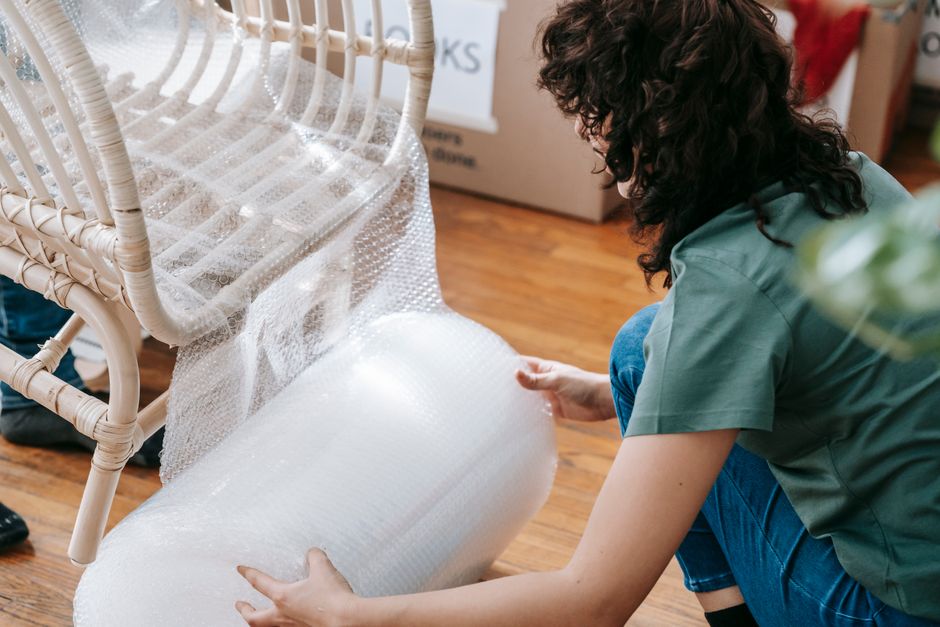
- Wrap the console and display panel in moving blankets or bubble wrap — these components are the most electronically fragile part of the machine and the most expensive to replace.
- Use a furniture dolly rated for the machine's weight — most treadmills range from 200 to 350 pounds — and ensure at least two people are moving it at all times.
- Never lay a treadmill on its side unless the manufacturer explicitly states it is safe to do so. Most motors and belt mechanisms are designed to be transported upright or folded.
Ellipticals and Rowing Machines
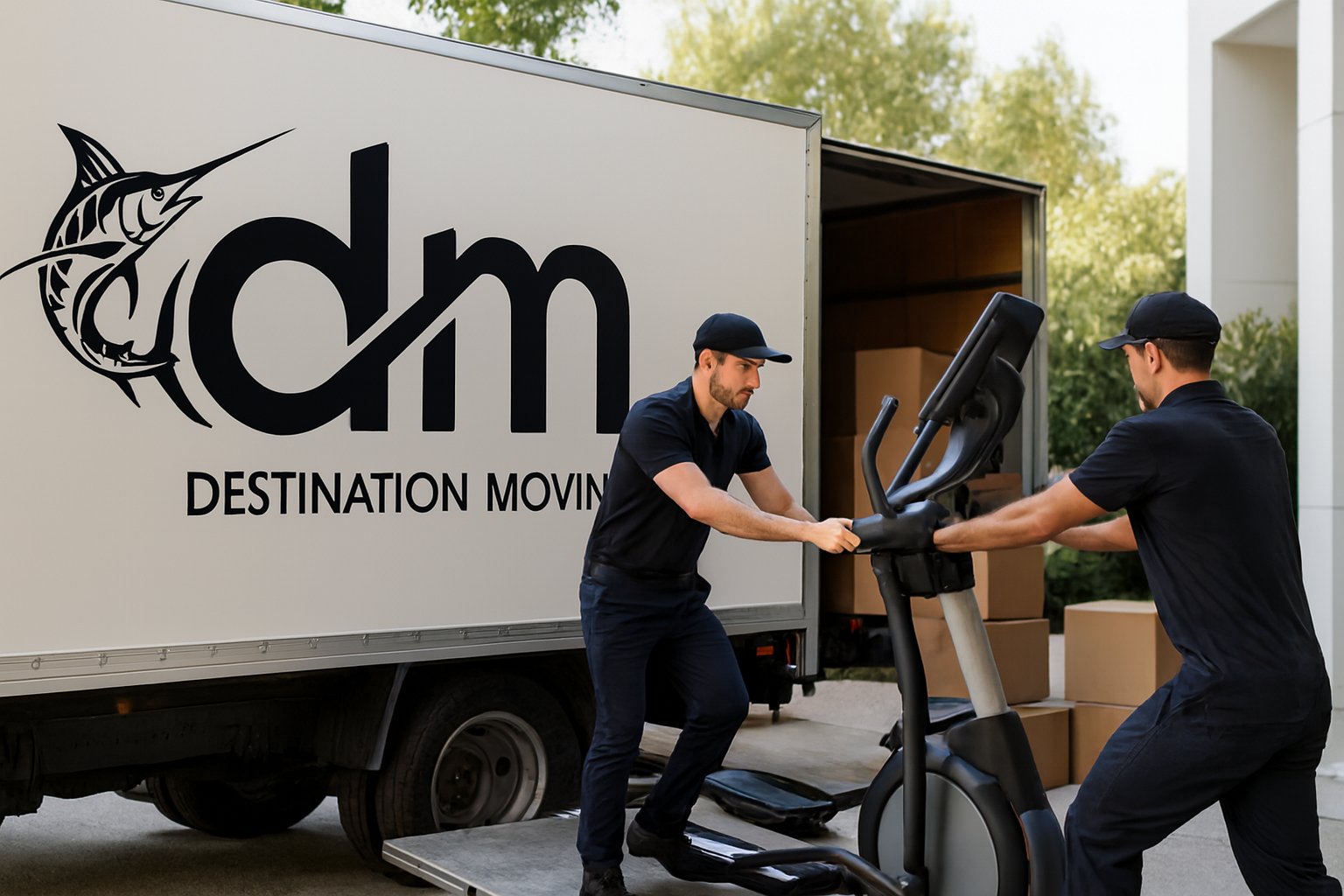
- Ellipticals are often awkward to move in assembled form due to their wide footprint and protruding pedal arms. Many models allow the pedal arms to be removed or folded — check your manual before moving day.
- Rowing machines with rail tracks are more fragile than they appear. The monorail that the seat slides along can bend if the machine is handled incorrectly. Most rowing machines fold compactly for transport — fold and secure the machine before moving it.
- Wrap all display consoles in moving blankets regardless of how robust they appear.
Stationary Bikes and Indoor Cycling Bikes
Most upright and recumbent stationary bikes can be moved assembled on a furniture dolly if doorways are wide enough. Indoor cycling bikes — often significantly heavier due to the flywheel — may require handlebars and the seat post to be lowered or removed to fit through doorways. Secure the flywheel from rotating during transport with a piece of foam or a folded moving blanket wedged against it.
Step Five: Accessories, Flooring, and Final Truck Loading
The accessories category in a home gym move is more substantial than most people expect: rubber floor tiles or foam mat sections, resistance bands, pull-up bars, suspension trainers, medicine balls, jump ropes, ab wheels, foam rollers, yoga blocks, and a collection of smaller items that have accumulated over time.
Rubber Flooring and Gym Mats
- Rubber gym tiles are heavy and awkward. Roll large rubber mat sections tightly and secure with stretch wrap. Stack interlocking tiles in flat bundles, no more than 10–12 tiles per stack, and wrap each bundle with moving blankets.
- Rubber flooring can off-gas in a sealed, hot truck — this is not dangerous but the odor is strong. Consider airing out rubber flooring before reassembly in your new home.
Loading Order in the Truck
Load gym equipment last on the truck so it sits against the cab wall at the front of the cargo area — the most structurally stable position. Weight plates and dumbbells should be loaded on the truck floor, not stacked on top of other items. Cardio machines and assembled racks should be secured with ratchet straps tied to the truck's D-ring anchor points. Accessories and lighter boxes load last, filling gaps around the larger equipment.
Protect your flooring at both ends of the move with plywood sheets, moving blankets, or rubber runner mats — appliance dollies and the weight of heavy gym equipment can gouge hardwood and tile in seconds.