Packing a keyboard for moving comes down to protecting three vulnerable points: the keys themselves, the internal circuit boards, and any exposed knobs or pitch wheels. A keyboard is lighter than a piano, but it is far more fragile in the places that matter most. A dropped synth or digital piano rarely shatters the way a glass item does. Instead it develops dead keys, crackling outputs, or a cracked LCD screen that only shows up once you plug it back in at the new place.
Most moving guides lump keyboards in with "electronics" or treat them like any other music gear, but a 61-key synth, a weighted 88-key digital piano, and a small MIDI controller all need slightly different handling. Here is how to get any of them to your new home working exactly as they did before the move.
How do you pack a keyboard for moving?
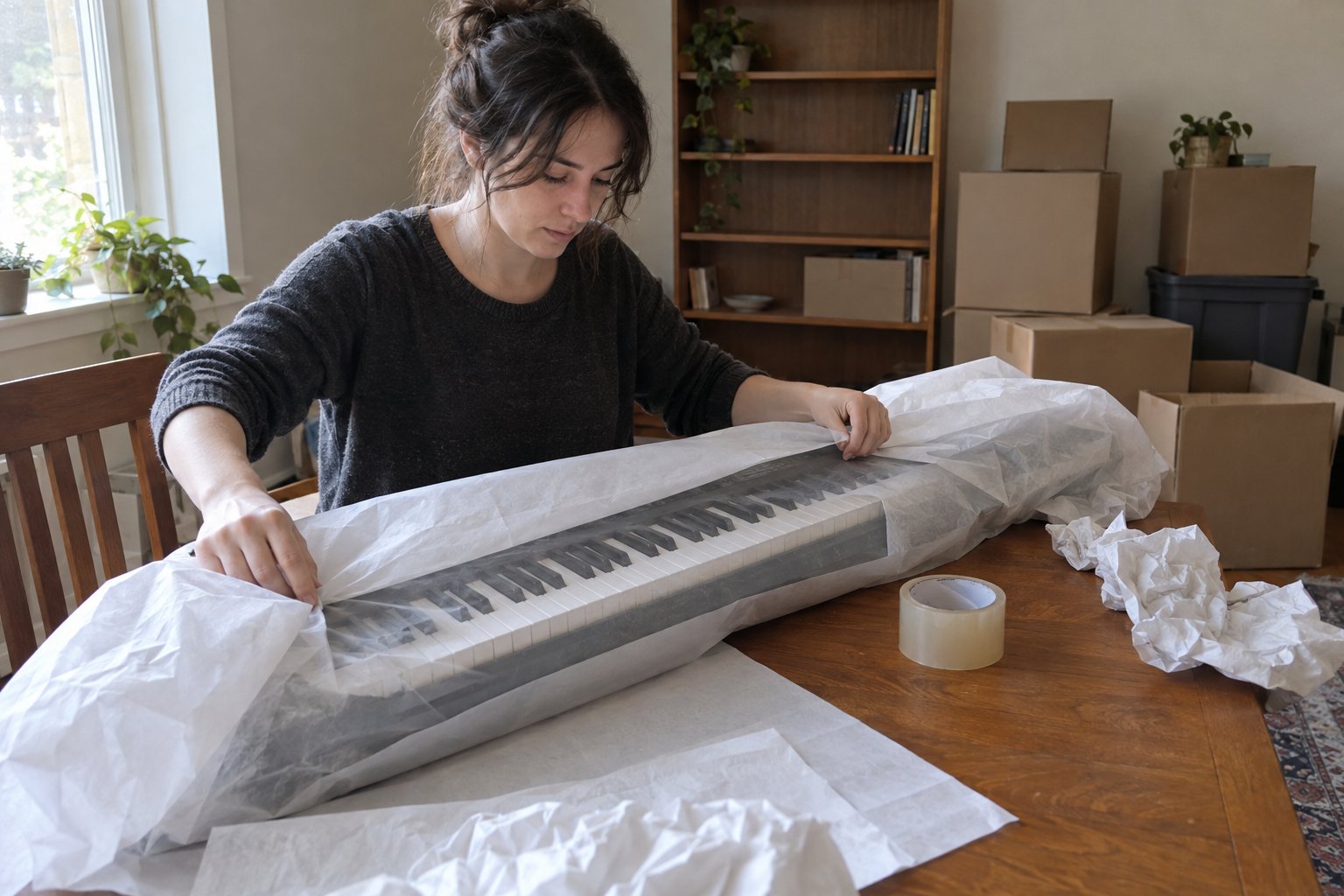
Pack a keyboard by removing the music stand and pedals, powering it down and unplugging all cables at least a few minutes before you move it, wrapping the body in a moving blanket or bubble wrap, and transporting it flat in its original case or a sturdy box with padding on all sides. The goal is zero flex in the chassis and zero pressure on the keybed.
If you still have the original gig bag or hard case, use it. Manufacturers design these to match the exact dimensions and weak points of the instrument, and they already account for the weight distribution of the keybed. If you no longer have it, a box rated for the keyboard's length (many 88-key boards run close to 52 inches) lined with at least two inches of foam or packing paper on every side is the next best option. Never fold a keyboard into a box that is too short; forcing it in at an angle stresses the end caps where the casing is thinnest.
Protecting keyboard keys during transit
Keys get damaged far more often from pressure during loading than from the drive itself. Lay the keyboard flat, never resting on its keys or standing on its end, and keep anything heavier from being stacked on top of it.
Before you wrap it, slide a piece of rigid cardboard or thin plywood over the entire key bed, cut slightly larger than the keyboard itself, and secure it with painter's tape at the edges (never directly on the keys, which can pull off the paint or printed labels). This spreads out any incidental pressure instead of letting it concentrate on one or two keys. Weighted, hammer-action keys found on most digital pianos are especially prone to sticking if they take a hard knock, since the internal weights can shift out of alignment.
Dealing with pitch wheels, knobs, and ribbon controllers
These protruding parts are the most likely things to snap off in a move, so give them individual attention rather than relying on the general wrap. Wrap a small piece of bubble wrap or foam around each knob, wheel, or fader cluster and tape it loosely in place so it cannot catch on anything during loading. If the keyboard has a removable music rest or control panel cover, take it off and pack it separately, wrapped in its own layer of paper or bubble wrap.
What's the safest way to transport a digital piano or keyboard long distance?
For long moves, the safest approach is a hard-shell case or flight case, upright storage only if the case is designed for it, and strapping it so it cannot shift inside the moving truck. Vibration over hours of driving is what loosens internal connections and rattles components, far more than a single bump during loading.
If you are shipping or trucking a keyboard across state lines, climate matters too. Extreme heat inside a parked truck can warp plastic housings and affect the tuning stability of certain synths, while sudden cold can cause condensation on circuit boards when the unit is brought back inside. Let the keyboard sit at room temperature for a few hours before powering it on at the new location, the same way you would with any sensitive electronics. If your move involves a multi-day haul, this is worth flagging to your moving company so the instrument isn't left in a hot trailer overnight. A long-distance moving service experienced with electronics can route and load gear to limit that exposure.
Should you pack cables, pedals, and stands separately?
Yes. Cables, sustain pedals, power adapters, and keyboard stands should travel in their own clearly labeled box, not loose inside the keyboard case. Mixing loose cables in with the keyboard risks them shifting and pressing against the casing or getting lost in moving-day chaos.
Coil cables loosely (tight coiling stresses the internal wiring over time) and secure each with a velcro tie or twist tie. Wrap the sustain pedal in a small towel or bubble wrap, since the metal base can scratch other items if it's rattling around. Keyboard stands with X-frames or Z-frames should be folded down and, if possible, wrapped at the hinge points where paint tends to chip. Label the box clearly as "keyboard accessories, fragile" so it doesn't end up at the bottom of a stack.
DIY packing vs letting movers handle your keyboard
A single small MIDI controller is reasonable to pack and move yourself if you follow the steps above. A full-size weighted digital piano, a vintage synth, or multiple keyboards as part of a larger studio move is a different calculation, especially when it's one piece among furniture, amps, and other gear going on the same truck.
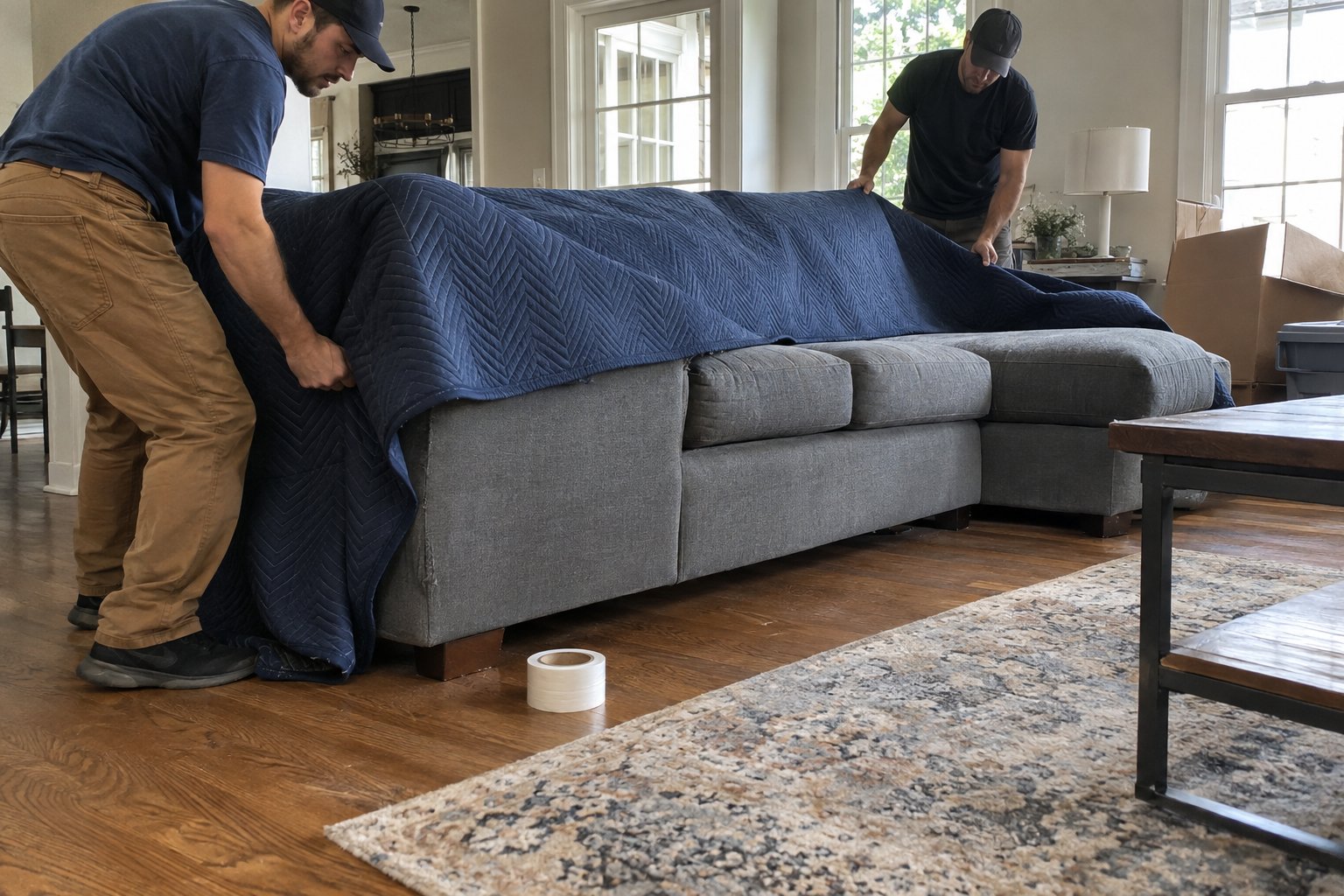
If your keyboard is part of a bigger household or studio relocation, it often makes more sense to have it loaded alongside everything else by a crew that already knows how to brace instruments against shifting furniture. Professional loading and unloading assistance can position fragile gear so it isn't wedged under heavier items, which is where most in-transit keyboard damage actually happens. If you're moving an entire music setup, our guide on packing a music room for moving covers how to coordinate instruments, amps, and recording gear together.
Whichever route you choose, request a written quote before moving day so you know exactly what's covered for fragile electronics. You can get in touch with our moving team to talk through how your keyboard and other gear will be handled.