Knowing how to pack a living room for moving is one of the most underestimated challenges in any relocation. The living room looks manageable — a sofa, a coffee table, maybe a bookshelf or entertainment center. But when you start inventorying what actually lives in that space, the scope expands quickly: large-screen televisions, gaming consoles, tangled speaker wires, framed artwork, decorative ceramics, potted plants, and years of accumulated shelf décor. Pack it without a plan and you will spend the first days in your new home untangling cords, hunting for remote controls, and nursing a cracked picture frame you could have protected in five minutes.
Why the Living Room Is One of the Most Complex Rooms to Pack
Unlike the kitchen, which is challenging because of fragility and liquids, or the bathroom, which is tricky because of tiny items and leaking bottles, the living room presents a unique combination of size extremes. You are simultaneously managing some of the largest items in the home — sectional sofas, entertainment units, floor lamps — and some of the smallest and most fragile — decorative figurines, remote controls, glass picture frames, and delicate speaker components.
There are four reasons living room packing consistently trips people up:
- Mixed scale: Items range from a wall-mounted television to a tiny decorative candle holder. Without category-based thinking, it is easy to pack things together that should never share a box.
- Cable and cord chaos: Entertainment systems often involve dozens of cables — HDMI, optical audio, power, ethernet, USB. Packing them without labeling or organization creates a puzzle that can take hours to solve on the other end.
- Furniture disassembly: Many living room pieces — media consoles, shelving units, modular sofas — need to be partially or fully disassembled before they can be safely moved. Skipping this step risks damage to both the furniture and doorframes.
- Sentimental and high-value décor: The living room tends to accumulate meaningful items: family photographs, heirloom decorative pieces, original artwork. These deserve more careful packing attention than they typically receive.
A category-by-category approach — separating electronics, furniture, décor, and soft goods — keeps the process controlled and prevents the common mistake of mixing incompatible items in a single box.
Gathering the Right Supplies Before You Start
Having the correct packing materials on hand before you open a single cabinet or drawer is the single most effective way to prevent damage and save time. For the living room specifically, you will need a wider variety of supplies than almost any other room.
- Large and medium moving boxes: Medium boxes work for books, framed photos, and smaller décor. Large boxes are appropriate for lighter bulky items like throw blankets, pillows, and lampshades.
- Small boxes: Essential for heavy items like a large collection of books or dense decorative objects. Dense items in large boxes create back injury risks and box failures during transport.
- Packing paper (unprinted newsprint): Use generously for wrapping decorative items, framed photos, ceramic pieces, and glass surfaces. Unprinted paper prevents ink transfer.
- Bubble wrap: Reserve for high-value or highly fragile items — framed artwork with glass, ceramic sculptures, glass tabletops, and speaker grilles.
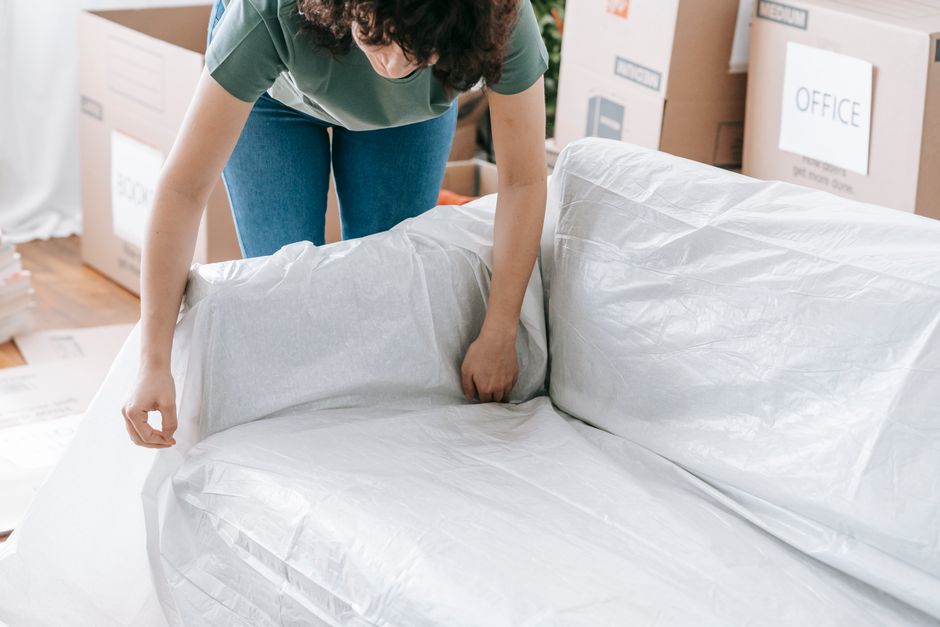
- Stretch wrap or furniture wrap blankets: Non-negotiable for protecting upholstered furniture and wooden surfaces during the move itself. These do not replace box packing but protect exposed furniture surfaces from scuffs.
- Cable ties and resealable zip bags: Indispensable for organizing cables. Bundle each cable set together, label it with a piece of masking tape, and store all cables from a single device in one labeled zip bag.
- Foam corner protectors: Useful for the corners of framed artwork and glass-topped furniture pieces.
- Permanent markers and labels: Label every box with its contents and its destination room. Mark fragile boxes on all four sides and on the top.
How to Pack Living Room Electronics
Electronics are the highest-risk category in the living room — both financially and in terms of packing complexity. The cardinal rule is to use original manufacturer packaging whenever you still have it. Original foam inserts are molded to the exact shape of each device and provide protection that no improvised packing can match.
Televisions
If you no longer have the original TV box, use a purpose-made television moving box, which is available in a range of sizes. These double-walled boxes are specifically designed for flat-panel screens. Before boxing, apply a layer of foam wrap or bubble wrap to the screen face — never use paper directly on the screen surface, as the texture can leave micro-scratches. Stand the television upright in the box; never lay a flat-screen on its side or back during transit, as the panel can crack from its own weight distribution across an unsupported surface.
Gaming Consoles, Streaming Devices, and Soundbars
Wrap each device individually in bubble wrap and box it separately or with similarly sized, well-cushioned items. Remove any discs from consoles and pack them separately in disc sleeves or jewel cases. Pack controllers together in a clearly labeled box with adequate padding to prevent buttons and joysticks from being pressed or bent during transit.
Cables and Cords
Before unplugging anything, photograph the back of your entertainment system from multiple angles. These photos will save significant time when reconnecting everything at your new home. Then unplug each cable, coil it loosely (avoid tight coiling, which stresses internal wiring), secure it with a velcro tie or twist tie, and label it with a small piece of masking tape indicating which device it belongs to. Store all cables for a single device together in one labeled zip bag.
Speakers and Audio Equipment
Speaker cones and grilles are surprisingly vulnerable. Wrap each speaker in bubble wrap with attention paid to protecting the grille face. Larger floor speakers should be wrapped in furniture blankets for transit. Pack smaller bookshelf speakers in their original boxes if available, or cushion them with bubble wrap and packing paper inside a snug-fitting moving box.
How to Pack Living Room Décor and Artwork
Decorative items and artwork require the most patience of any living room category. Moving quickly through this step causes the majority of breakage that people regret after a move.
Framed Photos and Artwork
Wrap each framed piece individually in two to three layers of unprinted packing paper, then add a layer of bubble wrap. Secure foam corner protectors on each corner before wrapping to prevent corner damage, which is the most common failure point for frames. Pack framed items in picture boxes or mirror boxes — these are tall, narrow boxes designed specifically for this purpose — and stand them upright rather than flat. Write "FRAGILE — ARTWORK — UPRIGHT" on all four sides and the top.
Decorative Objects and Ceramics
Each ceramic, glass, or resin decorative item should be wrapped individually. Nest smaller items inside larger wrapped items only if both are well-cushioned independently. Fill box voids with crumpled packing paper to eliminate any internal movement. A well-packed box should produce no sound when you shake it gently.
Books and Shelf Items
Pack books in small boxes only — this is a near-universal recommendation from professional movers. A box full of hardcovers can easily exceed 50 pounds, which risks the box bottom failing and your back taking the strain. Pack books spine-down or flat, and alternate the direction of spines to create a more stable, compact stack. Fill remaining void with packing paper.
How to Handle Living Room Furniture
Large furniture is where the living room move becomes a logistical challenge rather than just a packing one. The goal is to protect surfaces, reduce size where possible, and plan the exit path before any piece is lifted.
Sofas and Sectionals
Modular sectionals should be fully separated into individual pieces before moving day. Wrap cushions in stretch wrap or large garbage bags to protect fabric from dirt and moisture during transit. For leather furniture, use furniture blankets rather than stretch wrap, which can trap humidity against leather and cause spotting. Measure doorways before moving day and plan which orientation each piece will need to exit the room.
Coffee Tables and Media Consoles
Glass-topped tables require the glass to be removed, wrapped, and transported separately — never move a glass top while it is sitting on its table base. Wooden and metal furniture surfaces should be wrapped in furniture blankets or stretch wrap to prevent scuffs during loading and unloading. Remove drawers from media consoles and pack their contents separately — leaving items inside drawers adds unpredictable weight and allows contents to shift and break.
Floor Lamps and Table Lamps
Remove lampshades and pack them in large boxes with only light filler material — never pack anything heavy alongside a lampshade, as it will deform. Wrap the lamp base individually in packing paper or bubble wrap and box or stretch-wrap it for transit. Store lightbulbs separately; broken glass inside a box is a safety hazard when unpacking.
The Right Order for Packing the Living Room
Sequence matters in living room packing. Follow this order to maintain access to the space as long as possible while protecting the most valuable items first:
- Start with décor and artwork — these items serve no daily function and can be safely packed weeks before your move date without inconvenience.
- Pack books and media collections — DVDs, vinyl records, board games, and similar items are easy to pack in advance and take up significant box volume.
- Disassemble and pack secondary electronics — gaming consoles, soundbars, streaming devices, and secondary speakers can come down before the main television.
- Wrap and prepare furniture — do this the day before or morning of the move, since furniture stays in place until the truck arrives.
- Disconnect and pack the main television and audio setup — leave this for moving day morning so you can use it up until the last reasonable moment.
This sequence ensures that the living room remains functional and organized as long as possible while keeping your packing progress on track.
Final Walkthrough Before the Truck Arrives
Once every box is sealed and labeled and all furniture is wrapped, do a deliberate final walkthrough of the living room. Check behind and beneath every piece of furniture — remote controls, cables, charging blocks, and small décor items have a habit of hiding in the most inconvenient spots. Check window sills, built-in shelves, and any wall hooks or picture rails. Remove any wall-mounted shelving or anchors you intend to take, and patch the holes if your lease or sale agreement requires it. Taking fifteen minutes for a careful final sweep prevents the frustrating discovery of left-behind items after the truck has already departed.