Knowing how to pack a sunroom for moving is one of the most overlooked challenges in any residential relocation. At first glance the sunroom appears simple — a few chairs, some potted plants, maybe a small table and a rug. But once you take a thorough inventory, the real complexity surfaces: oversized wicker or rattan furniture that resists standard wrapping techniques, large floor plants that cannot simply be boxed, glass-topped tables and decorative mirrors that shatter without proper padding, hanging plants suspended from ceiling hooks, collections of ceramic pots and delicate figurines, outdoor-rated cushions and textiles that have absorbed moisture, lighting fixtures hardwired or plug-connected through unconventional routes, and fragile panes of glass in doors or skylights that must remain undisturbed during the move. Pack a sunroom without a deliberate plan and you risk broken glass, damaged plants, crushed furniture frames, and a room that arrives at your new home as a disorganized pile of casualties.
Why the Sunroom Requires Its Own Packing Strategy
The sunroom occupies a genuinely unusual category in any home. Unlike a bedroom, where the categories of items are predictable and the packing sequence is well-established, the sunroom blends elements of an outdoor space, a living room, and sometimes a greenhouse. That hybrid nature is exactly what makes it so easy to underestimate — and exactly what makes it so prone to moving day problems when it is treated as an afterthought.
There are four specific reasons sunroom packing goes wrong more often than homeowners expect:
- Furniture that defies standard wrapping: Wicker, rattan, bamboo, and wrought-iron sunroom furniture all have irregular shapes — curved arms, open lattice work, intricate scrollwork — that do not wrap neatly in moving blankets or fit cleanly into standard boxes. Without custom padding and thoughtful placement in the truck, these pieces arrive scratched, broken, or bent.
- Plants that require separate, specialized transport: Large potted plants cannot travel in a standard moving truck for more than a few hours without suffering from heat, darkness, and lack of air circulation. Most professional movers will not accept live plants for cross-state moves, and even local moves require careful thought about timing, vehicle conditions, and pot security to prevent soil spills and root damage.
- High concentration of glass and fragile surfaces: Sunrooms accumulate glass-topped tables, glass shelving, framed botanical prints, decorative mirrors, terrariums, glass lanterns, and ceramic accent pieces. This density of breakable surfaces requires more protective material per square foot than nearly any other room in the home.
- Environmental exposure complications: Sunroom furniture and décor are often exposed to more direct sunlight, humidity fluctuation, and temperature change than items in interior rooms. Wooden frames may be more brittle, wicker may be more prone to cracking, and cushion fabric may have degraded in ways that only become apparent when you begin moving items and handling them closely.
Working through the sunroom in a structured sequence — assessment and decluttering first, plant strategy second, glass and fragile items third, then furniture — keeps the process controlled and ensures that your destination sunroom is a functional, beautiful space rather than a collection of broken reminders of what the move cost you.
Step One: Assess, Declutter, and Make Decisions About Plants
Before a single piece of tape is applied, walk through the sunroom with clear eyes and make honest decisions about what is worth moving. Sunrooms are prone to accumulating décor that was charming in the old space but may not translate to the new one — oversized planters that suited a specific corner, rugs sized for a particular floor plan, or seasonal items that genuinely do not need to make the trip.
Pay specific attention to plants. This is the most consequential category decision you will make for this room. Consider the following questions for each plant:
- Is this plant healthy enough to survive the stress of a move? A plant that is already struggling may not recover from transport.
- How large is the pot, and how difficult is it to secure safely in a vehicle without tipping?
- If you are moving across state lines, is it legal to transport this species? Some states have restrictions on bringing certain plant varieties across their borders to prevent the spread of pests and diseases. Check your destination state's Department of Agriculture guidelines before moving day.
- Would this plant be better given to a neighbor, friend, or local plant shop, with a new plant purchased after you are settled?
For plants you decide to move, cease watering them two to three days before the move. This reduces the weight of the pot and minimizes the risk of soil spillage during transport. If pots are clay or ceramic, consider repotting into lightweight plastic pots for the move itself, then transferring back after arrival.
For décor items, be ruthless. Sunrooms often hold items — decorative birdcages, wind chimes, glass terrariums, ceramic garden stools — that are beautiful but genuinely difficult to pack safely. If an item has a high replacement cost and a low sentimental value, consider whether the effort and risk of moving it is worth it relative to selling it and purchasing a replacement at your destination.
Step Two: Packing Glass Surfaces, Mirrors, and Fragile Décor
Glass items demand more preparation time per item than almost anything else in the home. Budget accordingly. Rushing through glass packing is one of the most reliable ways to end a moving day with breakage and regret.
Glass-Topped Tables
Glass tabletops should always be removed from their bases and transported separately, standing upright on edge — never laid flat. Lying a glass panel flat distributes the entire weight of anything placed on or near it across the surface, dramatically increasing fracture risk. Standing upright on edge in a padded, vertical position is how professional glass movers transport panels, and the same principle applies here.
Wrap each glass panel in two to three layers of moving paper, then cover with a moving blanket or bubble wrap. Tape the wrapping securely without allowing tape to contact the glass surface directly. Label the wrapped panel clearly with "GLASS — FRAGILE — VERTICAL ONLY" on all visible sides.
Mirrors and Framed Art
Use mirror cartons — double-walled flat boxes sized for artwork and mirrors — whenever possible. These are available from most moving supply retailers and from professional moving companies. Place a layer of bubble wrap or foam against the glass surface before inserting into the carton. Fill any void space inside the carton with packing paper or foam so the item cannot shift during transit.
Ceramic Pots, Planters, and Decorative Accent Pieces
Ceramic items should be individually wrapped in two to three sheets of packing paper and then placed in boxes with crumpled paper or foam as a buffer layer on the bottom, between items, and on top. Do not over-pack ceramic items — a box with too many pieces risks pressure fractures at the bottom. Label all boxes containing ceramics as "FRAGILE" on all four sides and on top.
Glass Terrariums and Lanterns
Open-frame terrariums and glass lanterns are among the most difficult sunroom items to pack because of their irregular shapes and multiple glass panels. Disassemble what can be disassembled. Wrap each glass panel separately. Pack the frame separately. Include a note inside the box with a brief reassembly reminder if the piece has a specific configuration that will be difficult to reconstruct from memory.
Step Three: Packing Wicker, Rattan, and Upholstered Sunroom Furniture
Sunroom furniture is categorically different from interior furniture, and it requires a different approach to protection and placement in the moving truck.
Wicker and Rattan Pieces
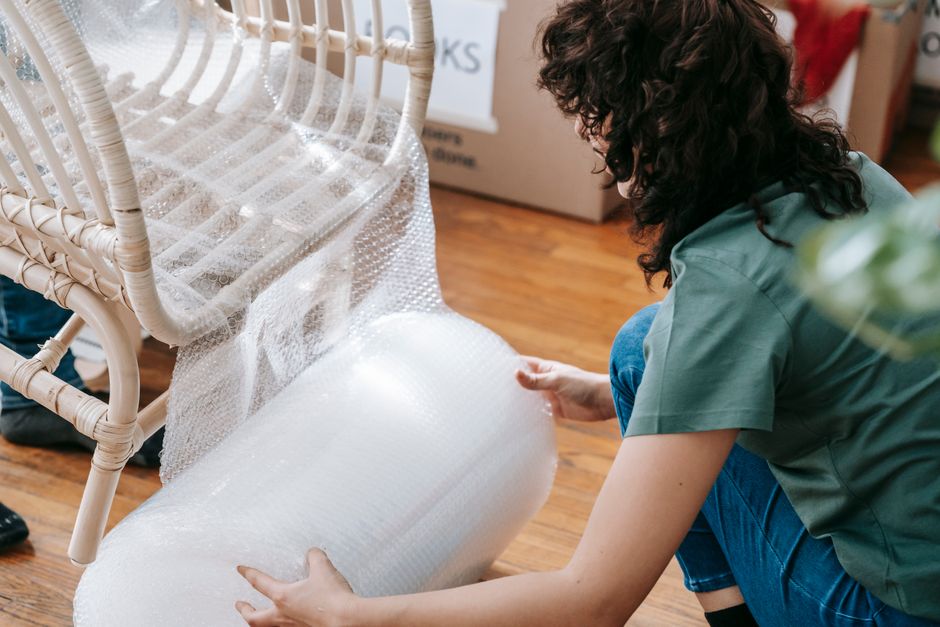
Wicker and rattan furniture — chairs, loveseats, side tables, baskets — cannot be wrapped in the same way as solid wood or upholstered pieces. The open weave structure means that standard moving blankets catch on the material and can pull or crack individual strands. Instead, use stretch wrap (plastic film wrap) applied directly to the piece to bundle loose elements together and provide a light layer of surface protection, then cover with a moving blanket secured with rubber bands or stretch wrap on top. Avoid taping directly to wicker surfaces.
If wicker chairs have cushions, remove the cushions and pack them separately in large bags or boxes. Cushions that remain on chairs during transit can shift, distort, and cause the chair to bear weight unevenly in the truck.
Wrought-Iron and Metal Furniture
Metal sunroom furniture is heavy and has sharp edges that can damage other items in the truck and injure movers. Wrap legs and sharp protrusions with moving blankets and secure tightly with stretch wrap or strapping tape (applied over the blanket, not to metal directly). Disassemble tables with removable legs. Pack hardware — bolts, screws, washers — in labeled zip-lock bags taped directly to the corresponding furniture piece so nothing is lost in transit.
Upholstered Sunroom Chairs and Sofas
If your sunroom includes upholstered seating, treat it the same as living room furniture: wrap in moving blankets, secure with stretch wrap, and protect from moisture exposure. If cushions are removable, bag them separately in large plastic bags to protect against dust and minor moisture during the move.
Step Four: Rugs, Textiles, Lighting, and Final Preparations
Once furniture and fragile items are handled, the remaining sunroom categories move more quickly — but each still deserves deliberate attention.
Rugs and Textiles
Sunroom rugs — whether indoor-outdoor polypropylene rugs or natural fiber rugs — should be vacuumed, rolled tightly, and secured with rug straps or stretch wrap. If a rug has been exposed to significant moisture or mildew, moving it may not be worth the risk of contaminating other items in the truck. Inspect both sides before rolling. Natural fiber rugs such as jute or sisal are particularly vulnerable to moisture damage and should be stored upright against a wall in the truck, not laid flat under other items.
Curtains, Blinds, and Window Treatments
Remove curtain rods, disassemble hardware, and bag all small components (brackets, screws, hooks) in labeled bags. Curtains can be folded and placed in wardrobe boxes or layered in large flat boxes with packing paper between folds to minimize wrinkle damage. Roll fabric gently rather than folding when wrinkle prevention is a priority.
Lighting and Electrical Items
Plug-in lighting fixtures should be disassembled, bulbs removed and individually wrapped, and all components boxed together with labels. For any hardwired fixtures you are taking with you — ceiling fans, pendant lights — these must be disconnected by a licensed electrician before your move. Do not attempt to disconnect hardwired fixtures yourself unless you are qualified to do so. Cap all exposed wiring after removal per local electrical code requirements, which vary by jurisdiction.
Final Walkthrough
After the sunroom is cleared, do a full visual sweep — check ceiling hooks, window sill ledges, the space behind furniture, and storage areas beneath seating. Sunrooms frequently have items tucked out of immediate sight: extension cords run along baseboards, small decorative items on high shelves, and tools used for plant care stored in corners. A five-minute walkthrough at the end prevents those items from being left behind.
Loading and Transporting Sunroom Items in the Moving Truck
How sunroom items are loaded into the moving truck matters as much as how they are packed. A few key principles:
- Glass panels and mirrors travel vertically, wedged between padded surfaces, never laid flat on the truck floor or placed under other items.
- Wicker and rattan furniture, which tends to be large but relatively light, should be loaded toward the top of the load or in open space where it will not be crushed by heavier items.
- Ceramic planters and pots should be loaded upright in a stable position where they cannot tip. Placing them in a box or bin and surrounding them with soft items — towels, moving blankets — provides additional stabilization.
- Plants being transported in a personal vehicle (recommended over the moving truck whenever possible) should be placed in a milk crate or box to prevent tipping, and the vehicle should be climate-controlled for the duration of transit.
- Heavy wrought-iron furniture should be loaded onto the truck early, positioned against the walls, and secured with furniture straps so it cannot shift during transport.
If you are working with a professional moving crew, communicate clearly about which sunroom items are highest priority for careful handling before loading begins. Do not assume that "FRAGILE" labels alone will convey the full picture — a brief walkthrough with the crew lead before they begin loading is always time well spent.