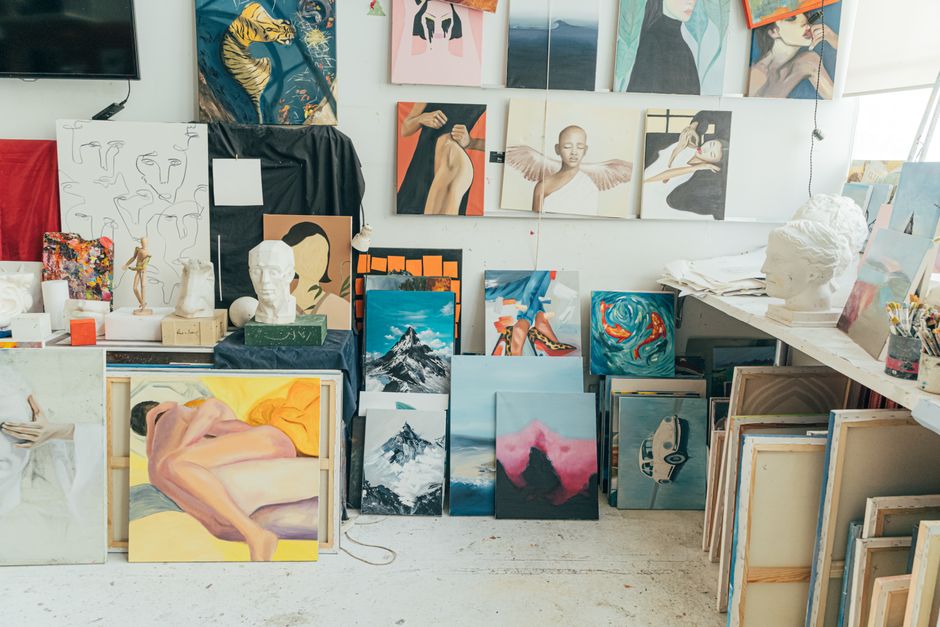
Knowing how to pack an art studio for moving is one of the most consistently underestimated challenges in any residential or commercial relocation. From the doorway, the room can look almost manageable — an easel in the corner, shelves of paint tubes, a few rolled canvases leaning against the wall, and a worktable covered in brushes and palette knives. But once you commit to a genuine, methodical inventory, the full complexity comes into focus: finished canvases in stretched frames that cannot be stacked face-to-face without damaging delicate paint surfaces, works on paper that buckle and tear under the slightest moisture or pressure, loose pigments and solvents that are regulated by many moving companies as hazardous materials, large easels and drafting tables that disassemble in non-obvious ways, glass-fronted framed works that shatter without careful corner protection, and a studio organization system built around the logic of creative process — not the logic of moving — that will be nearly impossible to reconstruct if it is not documented before a single tube of paint leaves its shelf. Pack an art studio without a deliberate plan and you risk arriving at your new space with cracked paint films, warped canvases, broken frames, lost hardware, and spilled chemicals that contaminate everything around them.
Why the Art Studio Requires Its Own Packing Strategy
The art studio occupies a genuinely unusual position among all the spaces in a home or commercial building. It is not defined by heavy appliances or by the uniform fragility conventions of a kitchen. It is defined instead by three overlapping categories that rarely appear together in any other room: finished and in-progress artwork with irreplaceable creative value, fine art supplies with specific chemical and environmental sensitivities, and large or awkward equipment that does not fit standard box dimensions. Each of those categories demands a completely different handling approach, and they all share the same space — which means packing one without carefully accounting for the others creates compounding risk at every stage of the move.
There are four specific reasons art studio packing goes wrong more often than people expect:
- Artwork is irreplaceable in a way that other possessions are not: A cracked painting, a buckled watercolor, or a bronze sculpture with a snapped element cannot simply be replaced with an equivalent purchase. The object is the work — in terms of both monetary value and creative labor. That asymmetry means even modest protective measures that cost a few dollars per piece are almost always worth it.
- Art supplies include genuinely hazardous materials: Oil paint mediums, turpentine, mineral spirits, aerosol fixatives, and solvent-based varnishes are flammable liquids and vapors. Most professional moving companies will not transport these materials, and attempting to pack them without proper containment risks a chemical spill, fire, or damage to every surrounding item. These materials require separate disposal or personal transport planning well before moving day.
- Canvases and works on paper fail in ways that look fine until unpacking: A stretched canvas that was leaned against another during transport may arrive looking intact. The damage — a pressure dent, a hairline crack in a thick impasto layer, or a ground separation — may only become visible days later, after settling, or when light hits the surface at a low angle. By that point, the window for a mover liability claim has often closed.
- Studio equipment is large, heavy, and awkward without obvious disassembly points: A heavy-duty easel, a light table, a pottery wheel, a printing press, or a large drafting table can be extremely difficult to move without disassembly — and the disassembly process is rarely as straightforward as it looks. Missing hardware or incorrectly reassembled joints can compromise both the equipment's function and the safety of anyone using it afterward.
How to Inventory and Document Your Art Studio Before Packing Begins
Documentation is the single most valuable step in any art studio move, and it is almost always skipped in the rush of moving preparation. Before you move a single item, spend time creating a clear record of what you have, where it is, and what condition it is in. This record serves two purposes: it tells you what packing materials you need, and it gives you an evidence base if anything is damaged in transit.
Photographing Finished and In-Progress Work
Photograph every piece of artwork — finished and in-progress — from at least two angles in good natural light. For larger works, take a close-up of any area with textural detail, impasto buildup, or surface sensitivity. For framed works, photograph the back of the frame to capture the hanging hardware configuration, any gallery labels, and the condition of the backing board. Store these photographs in a cloud folder labeled by move date so they are accessible even if your phone or laptop is packed away during transit.
Creating a Supply and Equipment List
Walk through your studio with a notepad or voice recorder and itemize every category of supply: paint tubes by medium (oil, acrylic, watercolor, gouache), drawing materials, printmaking supplies, photographic chemicals, clay and glazes, solvents and mediums. Note the volume of each category. This list tells you how many specialty art boxes, how much acid-free tissue, and how many tubes of foam padding you will need — and it flags the hazardous materials that need to be handled separately.
Packing Canvases, Framed Works, and Works on Paper
Finished artwork is the highest-stakes category in any art studio move, and it benefits from the most deliberate packing approach. The specific method depends on the format of the work.
Stretched Canvases (Unframed)
Stretched canvases must never be stacked face-to-face without a separator, and they should never be packed flat under other boxes. For transport, the safest approach is to separate each canvas with glassine paper (not bubble wrap directly against the paint surface, which can leave impressions in soft or impasto layers) and to stand canvases on their long edge — not flat — in a sturdy box or crate padded on all interior surfaces. For large canvases, purpose-built telescoping picture boxes or custom crates offer substantially better protection than standard cardboard boxes.
Framed Works with Glass
Glass-fronted frames require corner protectors on all four corners — commercial foam corner guards are inexpensive and reliable. After fitting the corners, wrap the entire frame in several layers of packing paper, then a layer of bubble wrap, with the bubble side facing away from the glass. Mark the outside of the package clearly with "GLASS — FRAGILE — THIS SIDE UP" in permanent marker. Pack framed works on edge, never flat, in picture boxes lined with foam padding. Never place a framed work at the bottom of a box stack.
Works on Paper: Drawings, Prints, and Watercolors
Works on paper are among the most environmentally sensitive items in any studio. They are vulnerable to moisture, pressure, folding, and even the acid migration that occurs when they come into contact with standard cardboard or newspaper. The correct packing approach is to interleave each work with a sheet of acid-free glassine or tissue paper, then stack works flat in a rigid flat file box or a purpose-built art shipping box, with foam padding above and below the stack. These boxes should be transported flat and should never have other boxes stacked on top of them.
Packing Art Supplies: Paints, Brushes, Mediums, and Hazardous Materials
Art supplies span a wide range of materials, and they require different approaches depending on whether they are fragile, liquid, or regulated.
Paint Tubes and Jars
Squeeze tubes of paint are generally durable in transit if they are securely capped. Check every cap before packing, and consider wrapping tubes in small bundles with rubber bands to prevent rolling. Jar-format paints — common in acrylics, gouache, and some watercolors — are more vulnerable. Seal each jar cap with a wrap of painter's tape to prevent vibration-loosening, and pack jars upright in small boxes with crumpled packing paper filling the voids between them.
Brushes and Fine Tools
Artist brushes are damaged primarily by two things during moves: pressure on the bristles and moisture. Roll sets of brushes in a length of bubble wrap with the handles extending slightly beyond the roll, so the bristles are padded without being compressed. Secure the roll with a rubber band and place it horizontally in a box rather than upright, where vertical movement in the truck could compress the bristle tips against the box interior.
Solvents, Mediums, and Aerosol Fixatives
This is the category that causes the most significant problems in art studio moves. Turpentine, mineral spirits, oil painting mediums, varnishes, aerosol fixatives, and alcohol-based mediums are all flammable materials that most professional moving companies are contractually and legally prohibited from transporting. Check your mover's hazardous materials policy before moving day — not on moving day. The practical options for these materials are: use up as much as possible in the weeks before the move, donate remainder to a local art school or community studio, dispose of according to your municipality's hazardous waste program, or transport them personally in a sealed container in a vehicle trunk (following all applicable regulations for your jurisdiction). Never pack these materials into a moving truck without explicit written confirmation from your mover.
Clay, Glazes, and Ceramics Supplies
Dry clay and dry glaze powders are heavy and can be packed in their original containers if those containers are intact and sealed. Wrap each container in a layer of packing paper and pack upright with padding between containers. Finished but unfired ceramic pieces should ideally not be moved — they are extremely fragile before firing. Finished and fired ceramics should be individually wrapped in generous bubble wrap with no piece touching another, and packed in small boxes with substantial cushioning on all sides.
Disassembling and Moving Studio Equipment
Large studio equipment presents a logistical challenge that is separate from the fragility issues of artwork and supplies. The key principle is the same as for any large furniture: research the disassembly process before moving day, gather the right tools, and keep all hardware organized and labeled so reassembly at the new studio is straightforward.
Easels
Most standing studio easels fold or disassemble into a manageable footprint. Lay the easel flat, fold in all adjustable arms and extension points, and secure the folded unit with moving straps or stretch wrap. Do not use tape directly on wood surfaces. Transport the easel on its side in the truck with a moving blanket underneath to prevent surface scratching.
Drafting Tables and Light Tables
Drafting tables typically have a tiltable top that detaches or folds and a separate leg assembly. Remove the top from the base if the table design permits it, wrap both components in moving blankets, and transport them flat or on edge depending on their dimensions. Light tables with glass or acrylic surfaces need glass-specific protection: corner guards, a face-to-face paper separator, and a clear label indicating the surface is fragile.
Printmaking Equipment
Printing presses, reduction blocks, and similar heavy printmaking equipment should be handled by experienced movers with appropriate lifting equipment. If your press is particularly heavy or valuable, contact a specialty moving service to assess whether a standard moving crew and truck are appropriate for the job, or whether a dedicated art and equipment mover is needed.
How to Label and Load Art Studio Boxes for a Safe Move
Labeling in an art studio move is more important than in almost any other room, because the consequences of a box being placed face-down, stacked under heavier items, or left in a hot truck are significantly worse. Every box and package from the studio should be labeled on at least two sides with its contents, its correct orientation ("THIS SIDE UP"), its fragility level ("FRAGILE"), and its destination room in the new space. Artwork packages should additionally carry a label identifying the piece by name or number, cross-referenced to your photograph inventory.
When loading the truck, art studio boxes and artwork packages should be loaded last — closest to the truck door — so they are the first items unloaded at the destination. They should never be placed at the bottom of a stack, and they should never be placed against the truck wall in summer moves, where metal walls can reach temperatures that damage paint films and warp wooden frames. If your move involves significant transit time in high heat, consider whether climate-controlled transport is warranted for your most valuable pieces.