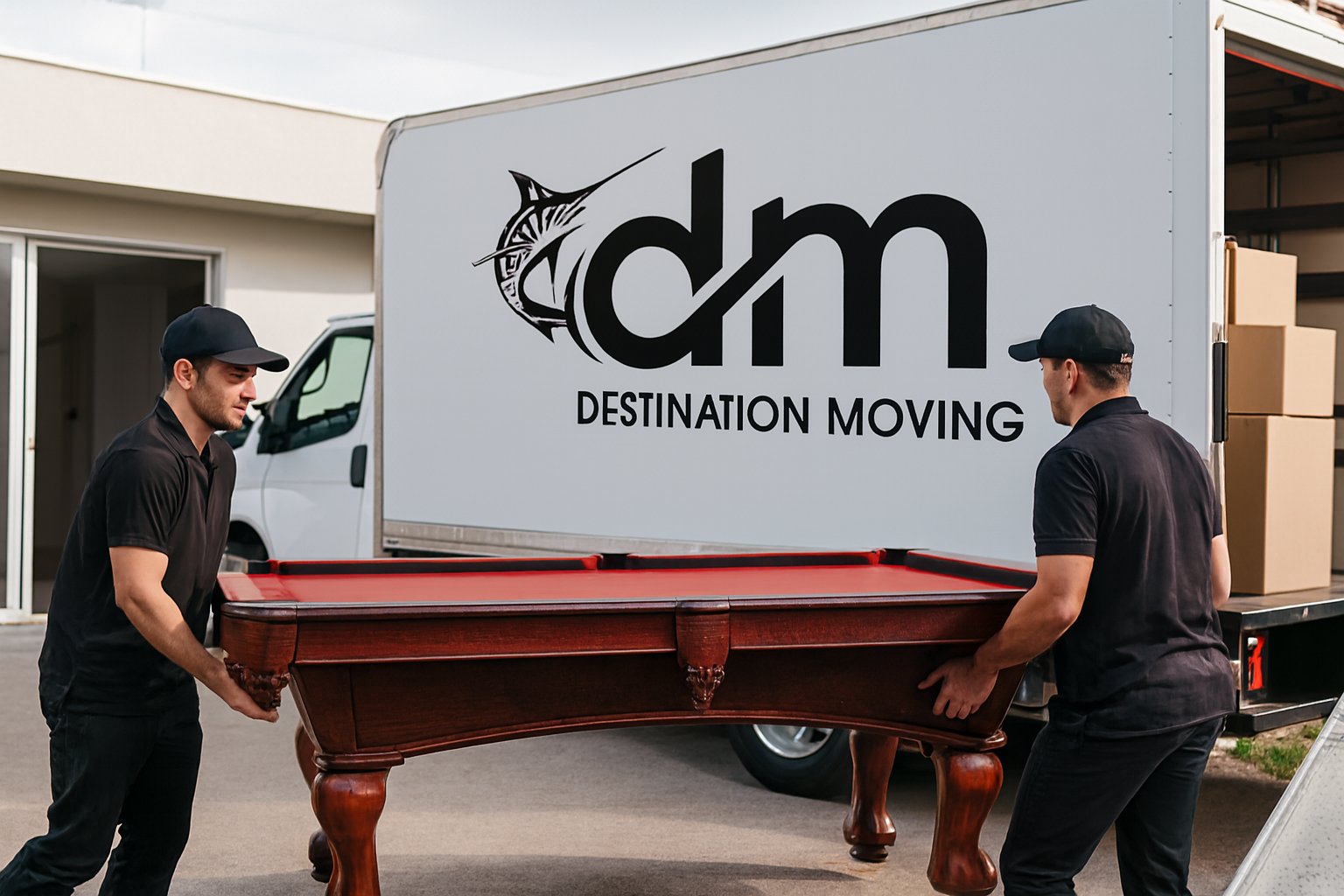
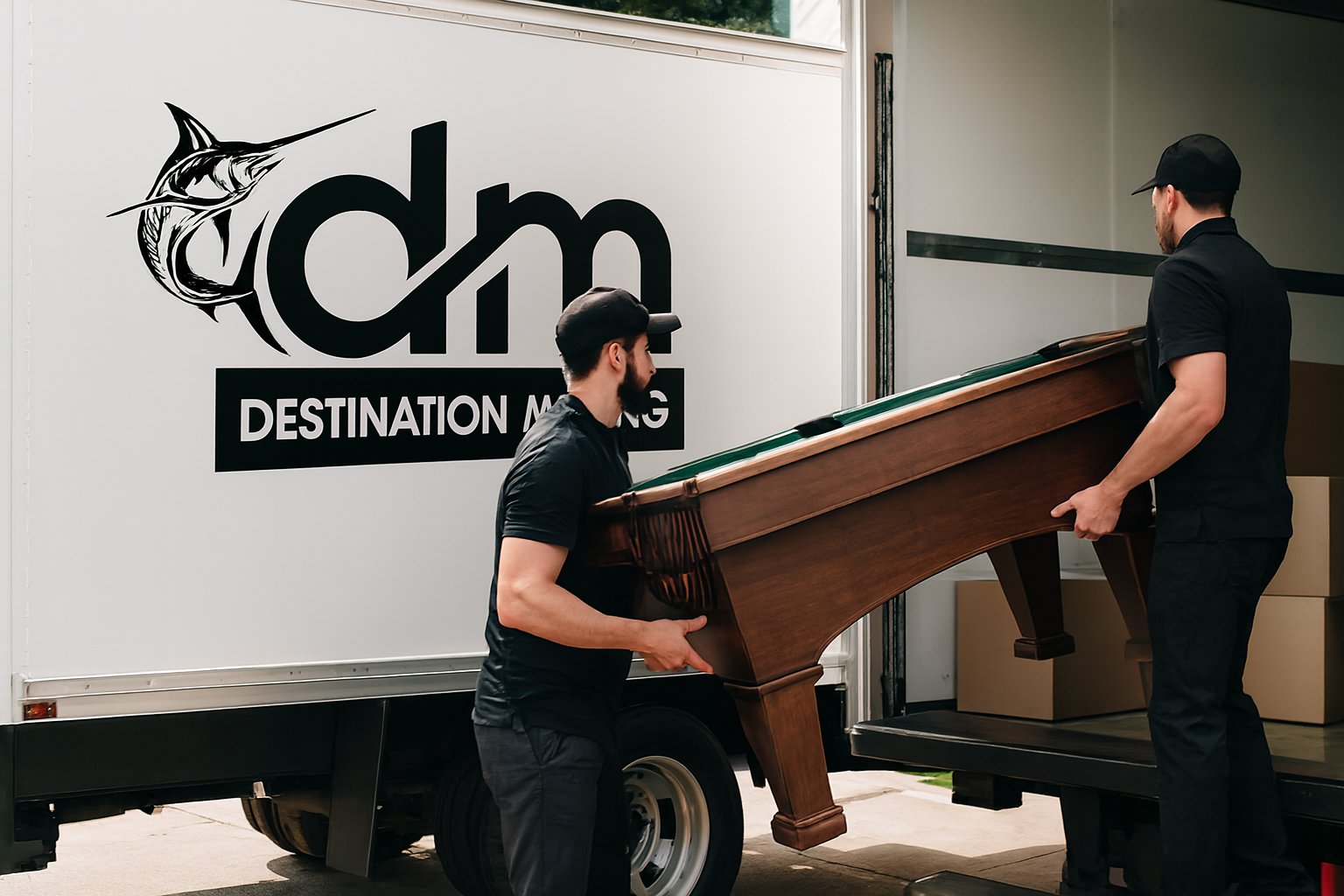
Moving a pool table a short distance, whether it is sliding it a few feet to repaint a wall or shifting it to the other side of the same room, still puts the slate, rails, and felt at real risk. The short distance tricks people into skipping precautions they would never skip on a full relocation, and that is exactly when cracks, seam separation, and torn felt happen. This guide covers what actually changes (and what does not) when the move is measured in feet instead of miles.
How to Move a Pool Table a Short Distance
The safest way to move a pool table a short distance is still to treat it like a real move: clear the surface, remove the rails and pockets if the table has a slate bed, lift rather than drag, and reset the level once it is in place. Skipping disassembly because the distance is short is the single most common cause of cracked slate and separated seams.
A one-piece slate table under about 400 pounds can sometimes be walked a few feet by four people without full disassembly, but three-piece slate tables (the standard for most home tables) should have the slate sections separated from the frame before any real movement, even across the same room. The seams between slate pieces are where the felt is glued and leveled; shifting the frame underneath without supporting each slate section independently is what causes those seams to crack or shift out of alignment.
Can You Move a Pool Table Without Disassembling It?
You can move a one-piece slate or slatron (non-slate) table a short distance without full disassembly if you have enough people and a clear path, but multi-piece slate tables almost always need at least the rails and pockets removed first. The risk is not the distance traveled, it is the flex and torque the frame experiences while carrying weight it was never designed to bear mid-transit.
If you are only sliding the table a few inches to vacuum or reach a wall outlet, and the table is not being lifted or tilted, disassembly usually is not necessary. Once you are lifting corners, changing the table's orientation, or moving it more than a couple of feet, treat it like any other slate move: rails off, slate sections separated and carried individually, frame moved empty.
What Tools and Setup Do You Actually Need?
A short move still requires furniture sliders or moving straps, a set of screwdrivers and hex keys for the rail bolts, and at least three to four capable helpers. Trying to improvise with fewer people or no sliders is where most short-distance moves go wrong, because the weight does not decrease just because the trip is shorter.
- Furniture sliders or moving dollies rated for heavy loads, placed under each leg before any sliding begins.
- Socket wrench or hex key set matched to your table's rail bolts, since forcing the wrong size strips the bolt heads.
- Soft moving blankets to wrap slate sections and rails even if they are only being set down a few feet away.
- A clear, measured path with doorways, thresholds, and stairs checked before anyone lifts a corner.
Skipping the sliders is a common shortcut on short moves. Dragging even a few feet without them can gouge flooring and shock-load the slate seams in ways a slow, supported slide will not.
What Mistakes Ruin a Short-Distance Pool Table Move?
The most common pool table moving mistakes on short trips are dragging the table across the floor, lifting from the rails instead of the frame, and skipping the releveling step once it is repositioned. Each of these seems harmless over a few feet, but the physics do not care how far the table travels.
Dragging puts uneven, twisting pressure on the frame and can crack slate that would survive a properly lifted move. Lifting from the rails rather than the solid frame beneath them stresses the rail joints and can loosen the bolts holding the cushions in place. And skipping the releveling step means your "quick move" ends with a table that plays noticeably worse, since even a slight tilt affects how balls roll, which defeats the purpose of a table people actually use.
Another mistake is assuming carpet padding will absorb the impact of a drop. It will not protect the slate seams from a jolt, and a mis-set table on carpet is also harder to level accurately afterward.
When Should You Call in Professional Help?
Call in professional movers when the table has three-piece slate, when you cannot get at least three strong helpers, or when the move involves stairs, tight doorways, or a change in room level. A short distance on paper does not mean a short list of hazards, and slate that cracks during a "quick" reposition costs far more to fix than the move would have cost to hire out.
If your table is a family piece, a collector's model, or one you simply do not want to risk, professional moving labor services can handle the disassembly, the lift, and the releveling in one visit, which is often faster and safer than a DIY attempt with borrowed tools. This is also worth considering if the short move is really the first leg of a longer one: a table going into storage or across town benefits from the same careful handling regardless of how far the truck ultimately drives, and pairing it with long-distance moving support keeps the table protected from the living room to the new address.
For homeowners weighing whether to attempt any part of a specialty item move themselves, it helps to read through general guidance on moving a pool table safely and correctly before deciding what you are comfortable handling solo versus what should go to a crew.
Ready to Move Your Table the Right Way?
Whether it is three feet or three hundred miles, a pool table deserves the same careful handling. If you would rather not risk the slate on a DIY attempt, get in touch with our moving team and we can walk you through what a professional move or repositioning would involve.