Moving a bookcase safely comes down to three things: emptying it completely before you lift a finger, disassembling whatever you can, and controlling the weight so it never rests on a corner or a thin shelf edge. Bookcases look simple compared to a piano or a safe, which is exactly why they cause so much avoidable damage. A loaded or poorly braced bookcase is top-heavy, awkward through doorways, and surprisingly easy to rack out of square.
Most people treat a bookcase like any other piece of furniture and find out the hard way that it isn't. Thin plywood backing, particleboard shelves, and tall narrow proportions make it one of the more fragile "big" items in a typical move. Here's how to get yours from one house to the next without a cracked side panel, a gouged staircase, or a trip to urgent care.
How do you move a bookcase without it falling apart?
You move a bookcase without it falling apart by stripping it down to its lightest, most stable form first: empty shelves, removed adjustable pegs, and detached pieces wherever the design allows. A bookcase that's been reduced to a bare frame is far less likely to flex, crack, or shed hardware in transit than one that's moved fully assembled and loaded.
Start by pulling every book, bin, and decorative object off the shelves. Even "sturdy" bookcases are rarely rated to be lifted, tilted, and carried while fully loaded. The weight shifts unpredictably, and a sudden lean can snap a shelf pin clean out of its socket. Stack the contents nearby in boxes sorted by size, since loose books packed spine-down in a sturdy box travel far better than books left in place.
If the bookcase has adjustable shelves, take them out and wrap each one separately. Shelves rattling loose inside a moving truck are a common source of chipped edges and scratched veneer. Tape pegs and shelf pins into a labeled bag and tuck it inside a drawer or tape it to the back panel so it doesn't get lost.
Disassembling a bookcase for moving: what actually comes apart
Most freestanding bookcases aren't built to be fully disassembled, but a surprising number have at least a few components worth separating: removable crown molding or trim pieces, a base that's screwed on rather than built in, or glass doors that lift out of their tracks. Check the back panel too. On many flat-pack bookcases, it's held on with small nails or screws that can be removed in a few minutes, which lightens the unit considerably and reduces the risk of the back bowing or popping loose mid-move.
If you still have the original assembly instructions, they're worth a quick look before moving day. They'll show you exactly which joints are meant to separate, which saves you from forcing a seam that was never designed to come apart.
What's the safest way to carry a bookcase through doorways and stairs?
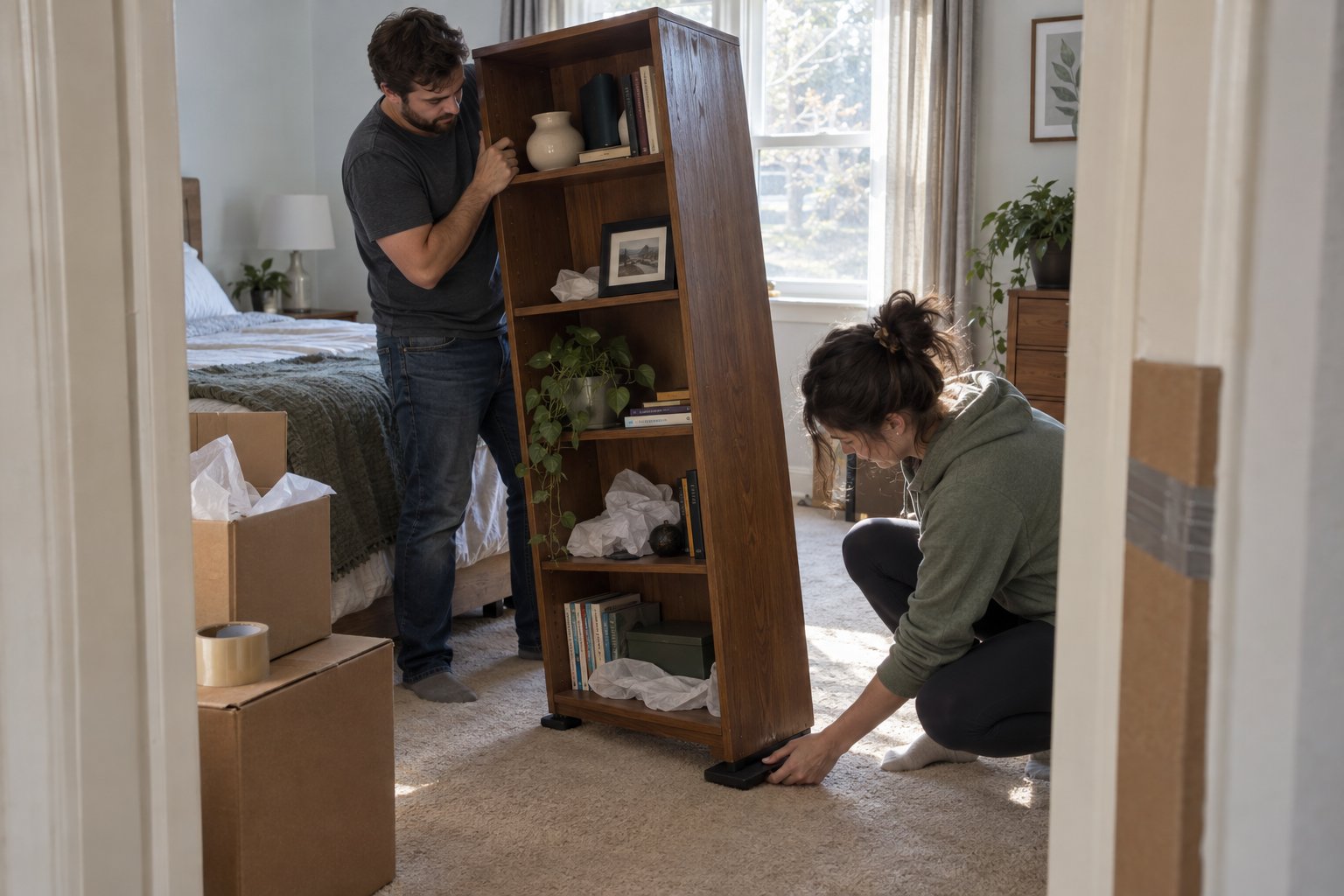
The safest way to carry a bookcase through tight spaces is to tip it onto its back or side (whichever the manufacturer's grain and joinery can tolerate) and carry it like a door rather than standing it upright and wheeling it through on a dolly's edge. Keeping it low and horizontal removes the risk of it toppling sideways into a wall or banister.
Before you lift, measure the bookcase's height, width, and depth against the doorway, hallway, and any stairwell turns it needs to pass. A piece that's six inches taller than a doorway often fits just fine on a diagonal tilt, but only if you've planned the angle before you're committed to carrying it.
Two people should always be on a bookcase taller than waist height. One person guides the bottom and watches the floor for obstacles, the other supports the top and steadies it against tipping. Communicate your moves out loud (lift, pivot, set down) rather than assuming the other person sees what you see.
Use furniture sliders under the base for short indoor repositioning, and switch to an appliance dolly with a strap for anything longer than a room-to-room carry. Strap the bookcase to the dolly at its center of gravity, not near the top, so it doesn't swing forward when you tilt the dolly back.
Protecting floors and corners along the route
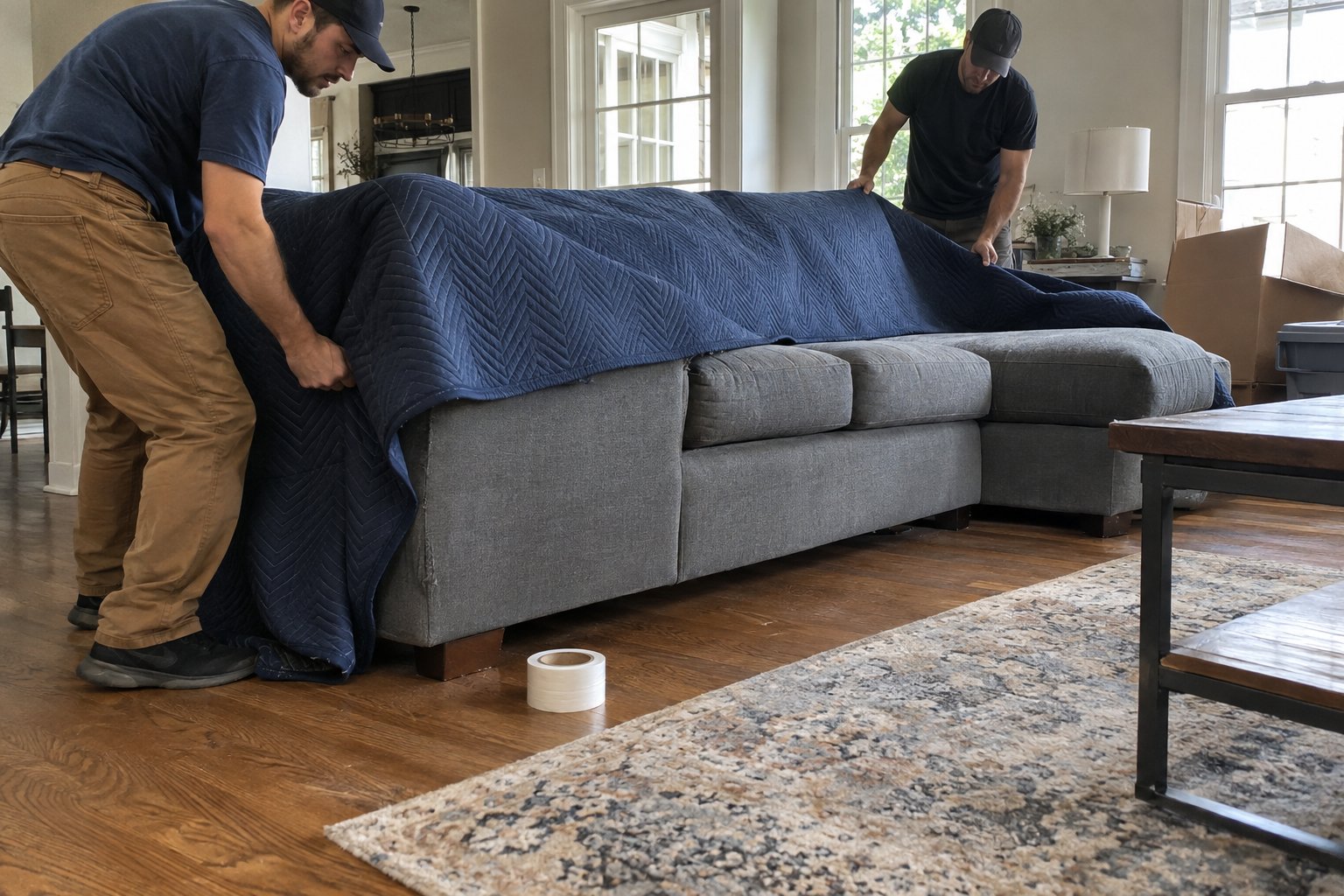
Lay down furniture sliders or moving blankets on hard flooring before you start, especially across thresholds and at turns where a dolly wheel tends to catch. Corner protectors or folded blankets taped around the bookcase's edges stop a bumped corner from gouging drywall or chipping the case itself. If you're navigating a stairwell, have a third person stationed at the turn just to call out clearance, since it's the single spot where most furniture gets dinged.
How do you pack and transport the books separately?
Books travel best in small, sturdy boxes packed spine-down or flat, never loose and never over-filled to the point the box bulges. A box of books gets heavy fast, so keep each one to a size you can actually lift without straining, and reinforce the bottom with extra tape before you load it.
Mix in some padding, like packing paper or a towel, along the sides of any box with irregular-sized books so they don't shift and bend covers during transport. Label each box with its weight and room destination so movers or helpers know to set it down carefully and put it near the new bookcase's location rather than stacking it under something heavier.
Should you hire movers for a bookcase or move it yourself?
A single small bookcase is usually manageable for two capable people with the right equipment, but tall, antique, glass-front, or built-in-style bookcases are worth handing to professionals. The risk isn't just dropping it. It's the structural damage that happens quietly, like a hairline crack in a side panel from uneven lifting, that you won't notice until the piece starts sagging months later.
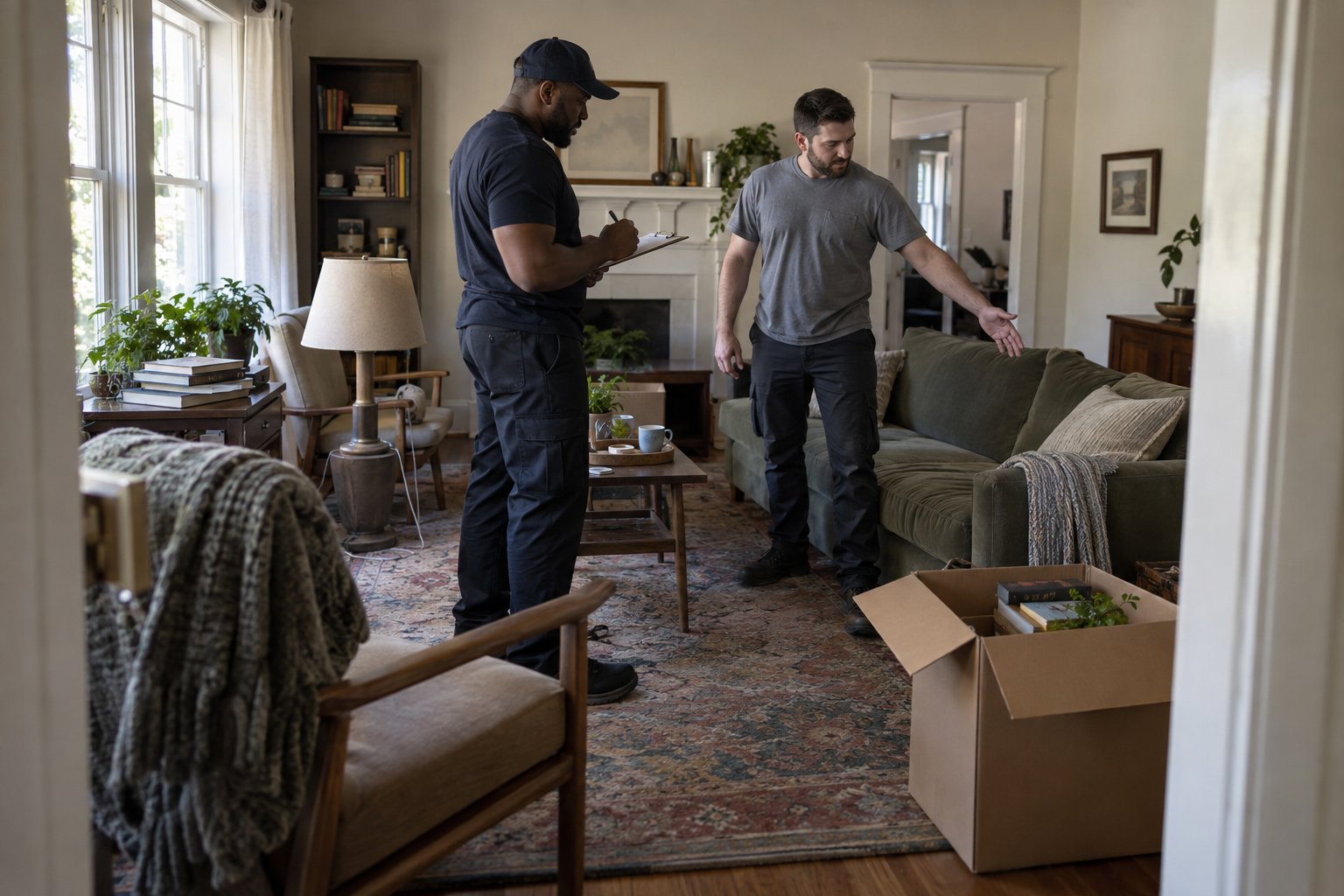
If your move involves several large furniture pieces, not just one bookcase, it often makes more sense to bring in help for the whole load rather than piecing together your own equipment and labor for a single item. Our team offers moving truck loading and unloading help for exactly this kind of situation, where you want the heavy lifting handled correctly without booking a full-service move. For a move that includes a tall or antique bookcase among other fragile furniture, our residential moving team can assess the full job and tell you what actually needs special handling.
If you're relocating a home library's entire book collection, not just the shelving it sits on, our guide on packing books for a move covers how to box, weight, and label large quantities so the boxes themselves don't become the hazard.
What if the bookcase is part of a larger furniture move?
When a bookcase is just one piece in a bigger household move, it's worth getting a written quote that accounts for all your furniture together rather than estimating item by item. Movers who see the full inventory, including the bookcase's height, material, and whether it's glass-fronted, can plan equipment and crew size accordingly instead of improvising on the day.
Request a moving quote from our team and mention any oversized or fragile furniture up front so it's accounted for before the truck arrives.