To wrap a couch for moving, start by vacuuming and treating stains, then remove any loose cushions and legs, cover the frame in stretch plastic wrap or moving blankets secured with tape or bands, and protect every corner before it goes anywhere near a doorway or a truck ramp. Skipping any one of these steps is usually what turns a routine move into a couch that arrives torn, stained, or wedged sideways in a hallway.
A couch is one of the few pieces of furniture that has to survive two different threats at once: rough handling during transport and the tight geometry of getting it out of one house and into another. Most of the advice out there focuses on one and ignores the other. Here is what actually matters for both.
What should you do to a couch before you even start wrapping it?
Clean the fabric first, remove the cushions, and check for any parts that detach. Wrapping a dirty or fully assembled couch just locks dust and pressure points into the material for the length of the move.
Run a vacuum with an upholstery attachment over every surface, including underneath if it sits on short legs. Spot-treat any stains with a fabric-safe cleaner and let them dry completely; sealing a damp stain inside plastic wrap for hours can set it permanently or invite mildew. Pull off all loose and semi-attached cushions, throw pillows, and any removable arm covers. If the couch has legs that unscrew, take them off and bag the hardware with tape so it does not disappear in a moving box. A couch that has been broken down to its simplest shape is easier to wrap tightly and far easier to carry through a tight space.
Moving blankets or plastic wrap: which one actually protects a couch?
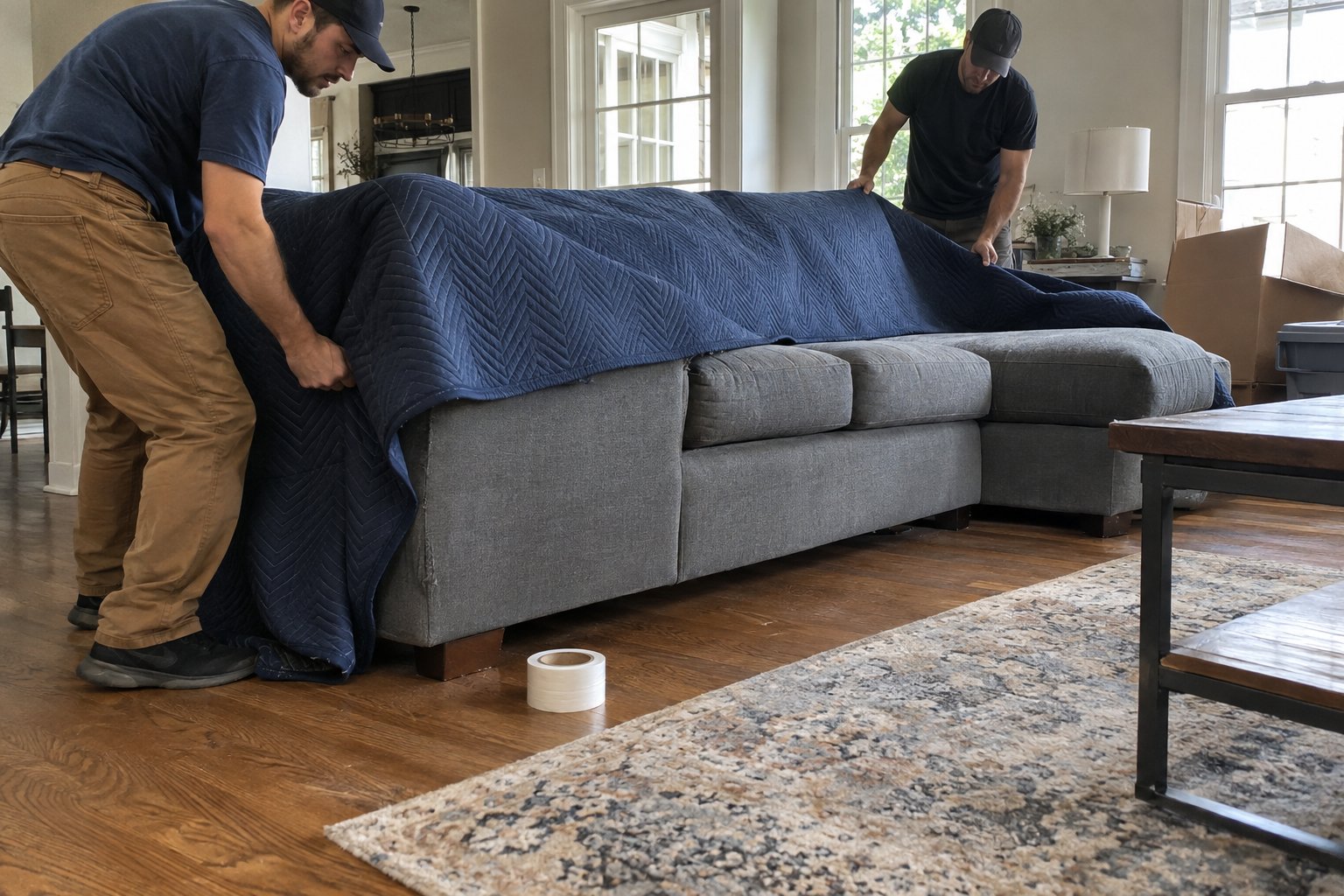
Use both, in the right order. Moving blankets absorb impact and prevent scuffs against door frames and truck walls, while plastic wrap holds the blankets in place and keeps out dirt, moisture, and dust during transport. Neither one does the other's job.
Plastic wrap alone does almost nothing to cushion a corner that clips a doorframe; it just keeps the fabric clean while the impact still happens underneath. Blankets alone slide around and bunch up without something holding them to the frame. The sequence that works: drape moving blankets over the entire couch, tuck them snugly around arms and the back, then wrap stretch plastic film around the blankets to hold everything in place. Avoid wrapping plastic directly against bare upholstery for long stretches, especially in humid conditions, since trapped moisture can lead to mildew by the time the couch is unwrapped at the new house. If you only own plastic wrap, at minimum pad the four corners and any exposed wood legs with cardboard or towels before wrapping.
How do you actually get a wrapped couch through a doorway?
Tilt the couch on its end, angle the leading arm through first, and walk it through in short, controlled movements rather than pushing straight on. Measure the doorway and the couch's widest dimension before you lift, not after you are already stuck halfway through.
Most couches will not fit through a standard doorway right side up. Standing it on one end and rotating the top slightly toward the opening usually clears both the frame and any hallway turn. Two people should communicate constantly during this part: one calls out obstacles, the other focuses on the angle. Remove doors from their hinges ahead of time if the clearance is close, and pull up any doorway rugs that could catch a leg or a wrapped corner. If a couch genuinely will not pass through a doorway or stairwell no matter the angle, some crews will remove a window or, in rare cases, disassemble the frame; that decision is worth leaving to professionals rather than forcing it and damaging a wall or the couch itself.
What is the safest way to load a wrapped couch into a truck?
Load the couch on its end against a side wall, secure it with straps before adding anything else nearby, and never stack heavy boxes directly on top of unsupported cushions. A couch that shifts during transit is far more likely to arrive with a torn seam or a bent frame than one that was simply wrapped well.
Position it toward the front of the truck, standing on end if the ceiling height allows, since this uses less floor space and keeps the heaviest single item from sliding during braking. Strap it to the truck wall using tie-down points if the vehicle has them. Keep at least a few inches of clearance from anything with sharp corners, like a dresser or a bookshelf, that could puncture the wrap during a sudden stop. If the couch must lie flat because of ceiling height, put its own cushions back underneath as padding rather than leaving bare frame in contact with the truck floor.
Do you need professional help to move a couch safely?
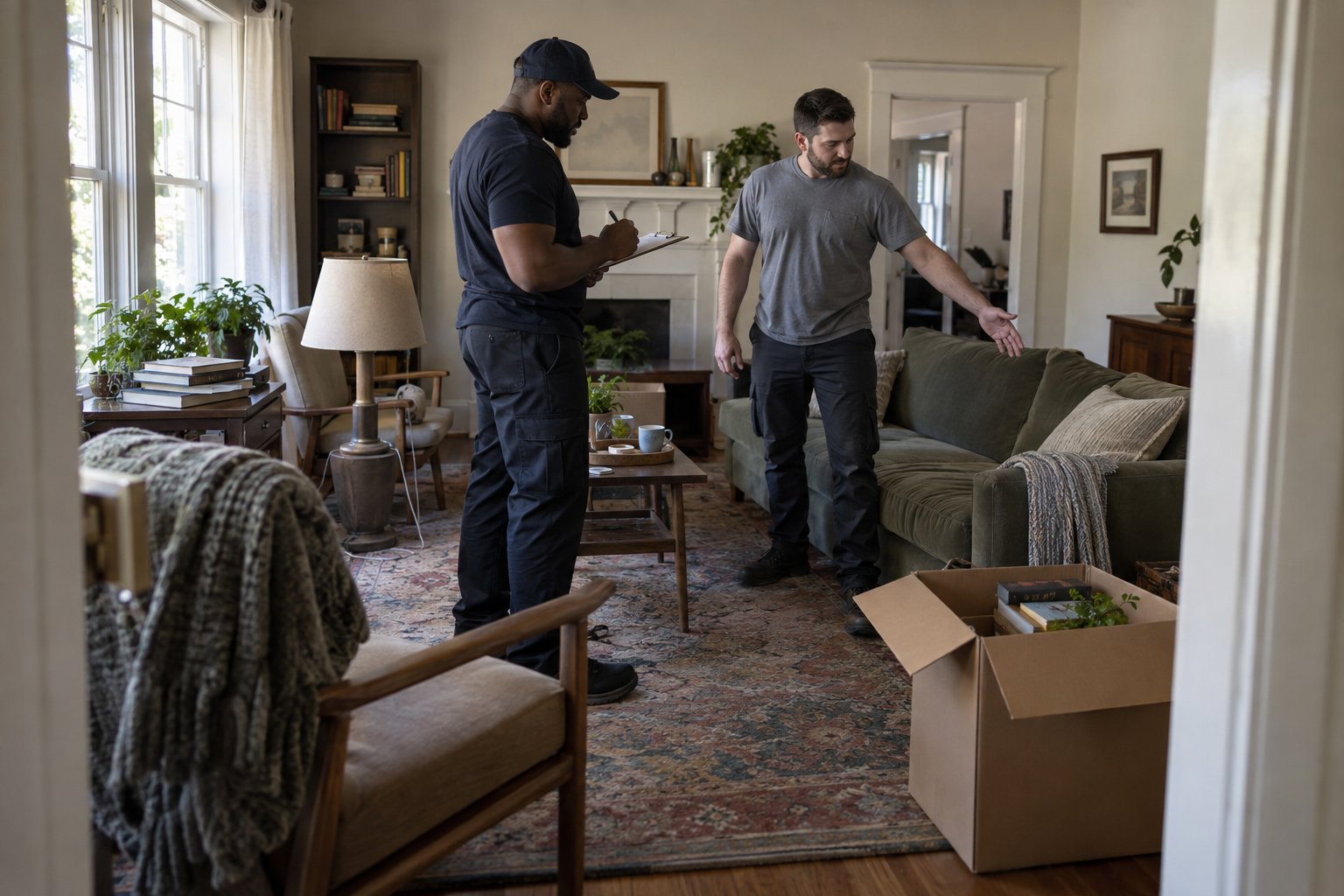
Not always, but a couch that is oversized, has a sleeper mechanism, or has to clear a tight stairwell is a common source of injury and property damage when moved by hand without the right equipment. A dolly, forearm straps, and a second set of experienced hands make the process considerably safer and faster.
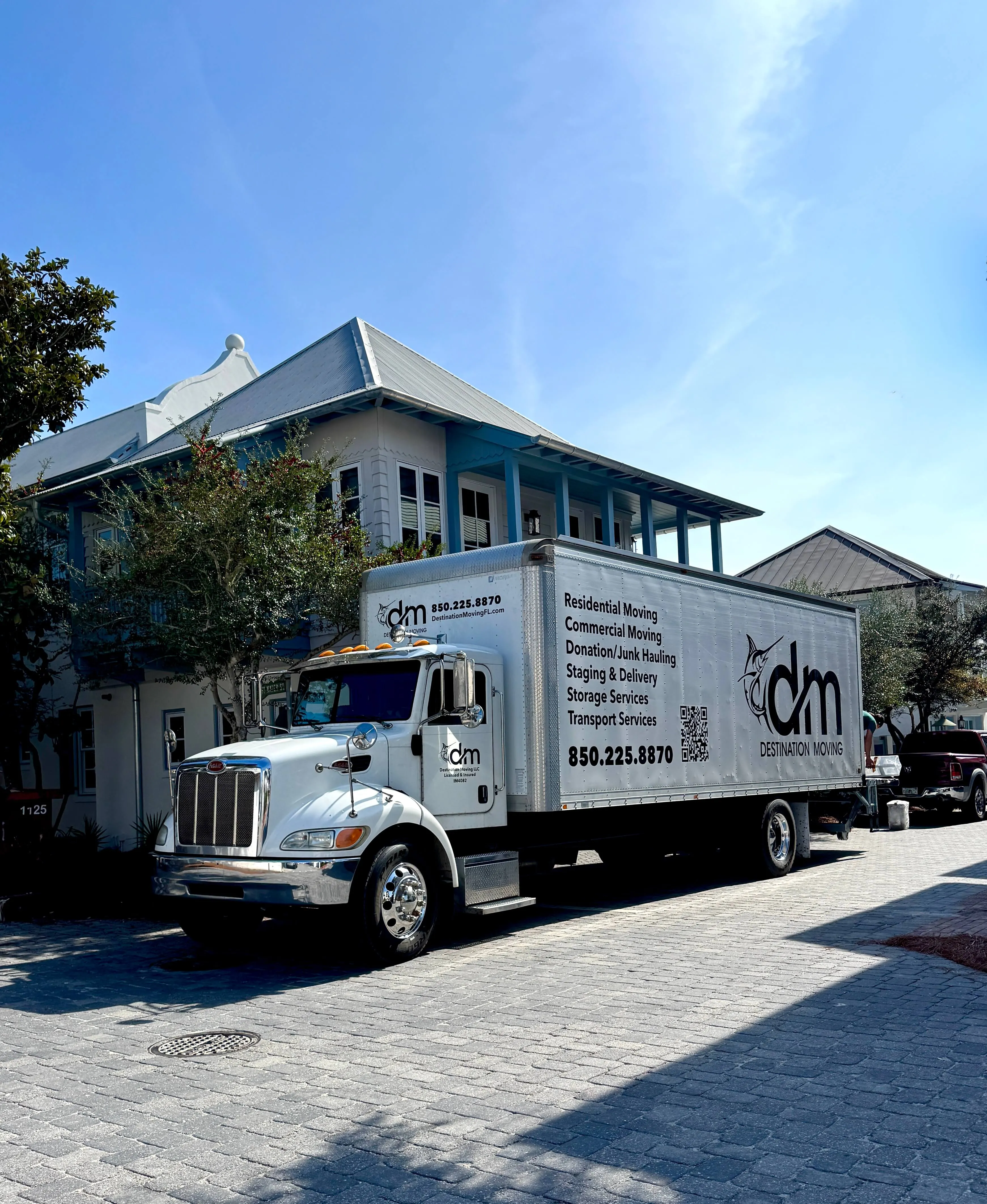
If your move involves multiple large furniture pieces, several flights of stairs, or a couch that two people genuinely cannot control on their own, it is worth requesting help rather than risking a back injury or a damaged doorway. Destination Moving's moving truck loading and unloading service is built for exactly this kind of heavy, awkward furniture, and it is a common add-on even for people handling the rest of their own packing.
Frequently asked considerations for couch protection
Beyond the wrapping steps above, a few situational questions come up often enough to address directly, especially for people moving a couch a longer distance or through a particularly tricky layout.
For a long-distance move, plan for the couch to sit wrapped and loaded for a much longer stretch of time, which raises the stakes on ventilation and secure strapping compared to a short local trip. And if you are also relocating a large wooden piece like a china cabinet, apply the same clean-then-pad-then-secure sequence, since fragile joints and glass panels benefit from the identical blanket-then-wrap approach described here.
When is it time to just replace the couch instead of moving it?
If the frame is already cracked, the fabric is failing at the seams, or the couch barely survived its last move, the cost and risk of moving it again may outweigh keeping it. A couch on its last legs is more likely to suffer real damage during transport, and a torn or collapsed frame usually cannot be fixed on the other end.
Weigh the couch's condition honestly before you spend an afternoon wrapping and hauling it. If it is structurally sound and simply needs protection, the steps above will get it to your new home intact. If you decide it is not worth moving, donating it rather than sending it to a landfill is worth considering, and donation removal services can pick it up so you are not stuck coordinating a separate drop-off during an already busy week.
Whichever route you take, request a written quote before moving day so you know exactly what is included, from wrapping materials to loading assistance. You can request a moving quote from Destination Moving to get specifics for your own move.