A solid moving day checklist comes down to three windows: the hour before your crew arrives, the hours while they load and drive, and the hour after they leave. Miss a step in any of those windows and you end up chasing boxes, chargers, or a parking spot while a truck idles outside. Here's what actually needs to happen in each one, and why.
What should be done the morning movers arrive?
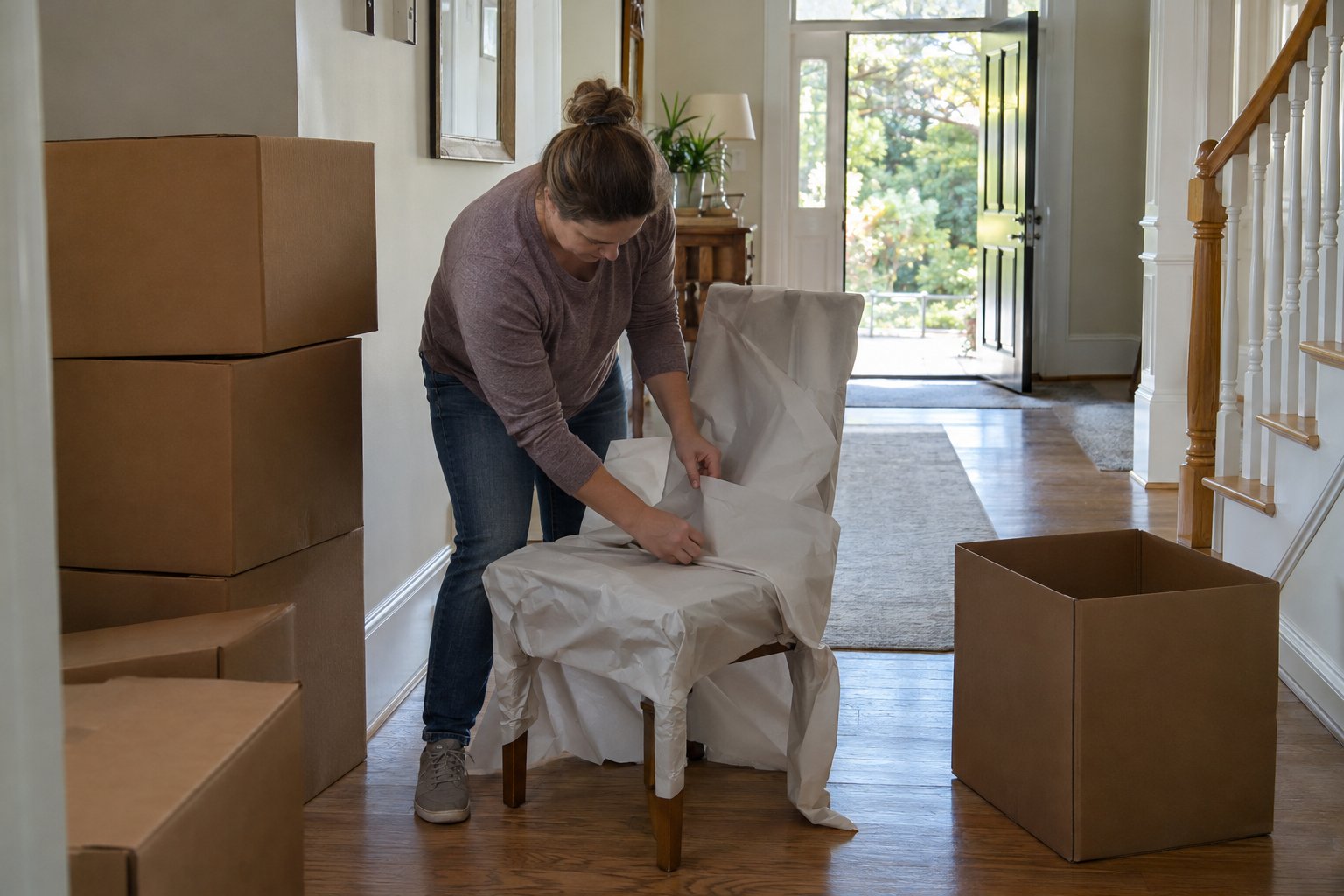
Before your crew pulls up, everything that's going should be boxed, labeled, and clustered near the door it will exit from, with a clear path for dollies and a parking spot reserved out front. The goal is for the crew to spend their time carrying, not waiting on you to finish packing or move a car.
Walk the house one more time and confirm nothing is still half-packed. A loose pile of items "to figure out later" slows a crew down more than almost anything else, because they have to stop and ask what's moving and what's staying. If you're using moving truck loading and unloading help rather than a full-service move, have your own rented truck backed into position and the ramp clear before the crew's scheduled arrival time.
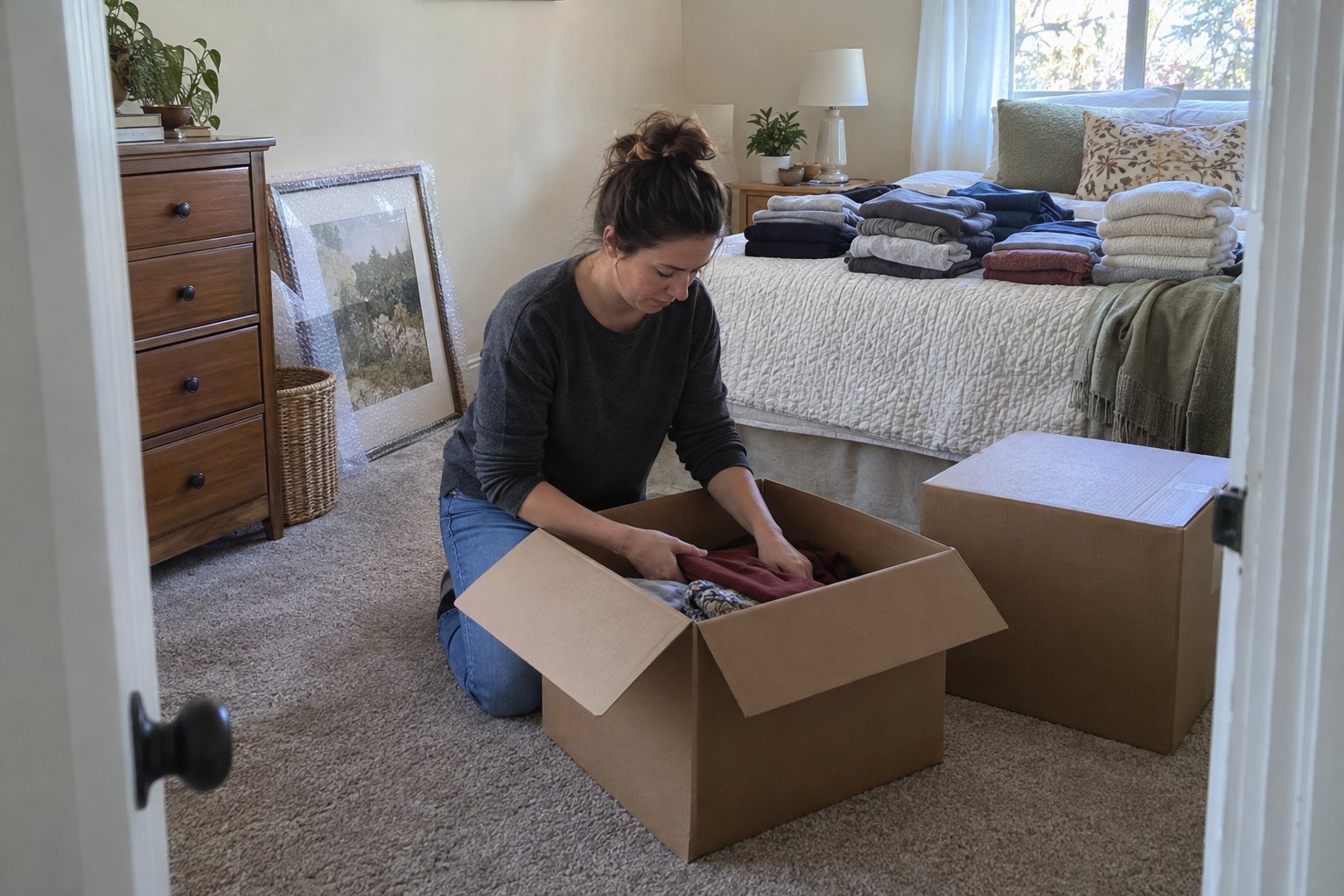
Set aside a small bag with chargers, medications, basic toiletries, a change of clothes, and any paperwork you'll need that night. This bag travels with you, not in the truck, so plan on packing it the night before rather than the morning of.
Checklist: what to prep by room before the crew arrives
Breaking prep down by area keeps you from forgetting a step tucked into a corner of the house. Each group below matters for a different reason, mostly to prevent delays or damage once the crew starts working.
- Entry points and pathways: clear rugs, mats, and small furniture from doorways and hallways so there's a straight, unobstructed path from each room to the truck.
- Kitchen: empty the fridge and let it sit open for a few hours if it's moving, since a sealed appliance can develop mildew in transit.
- Electronics: photograph cable setups before disconnecting anything, so reassembly at the new place doesn't turn into guesswork.
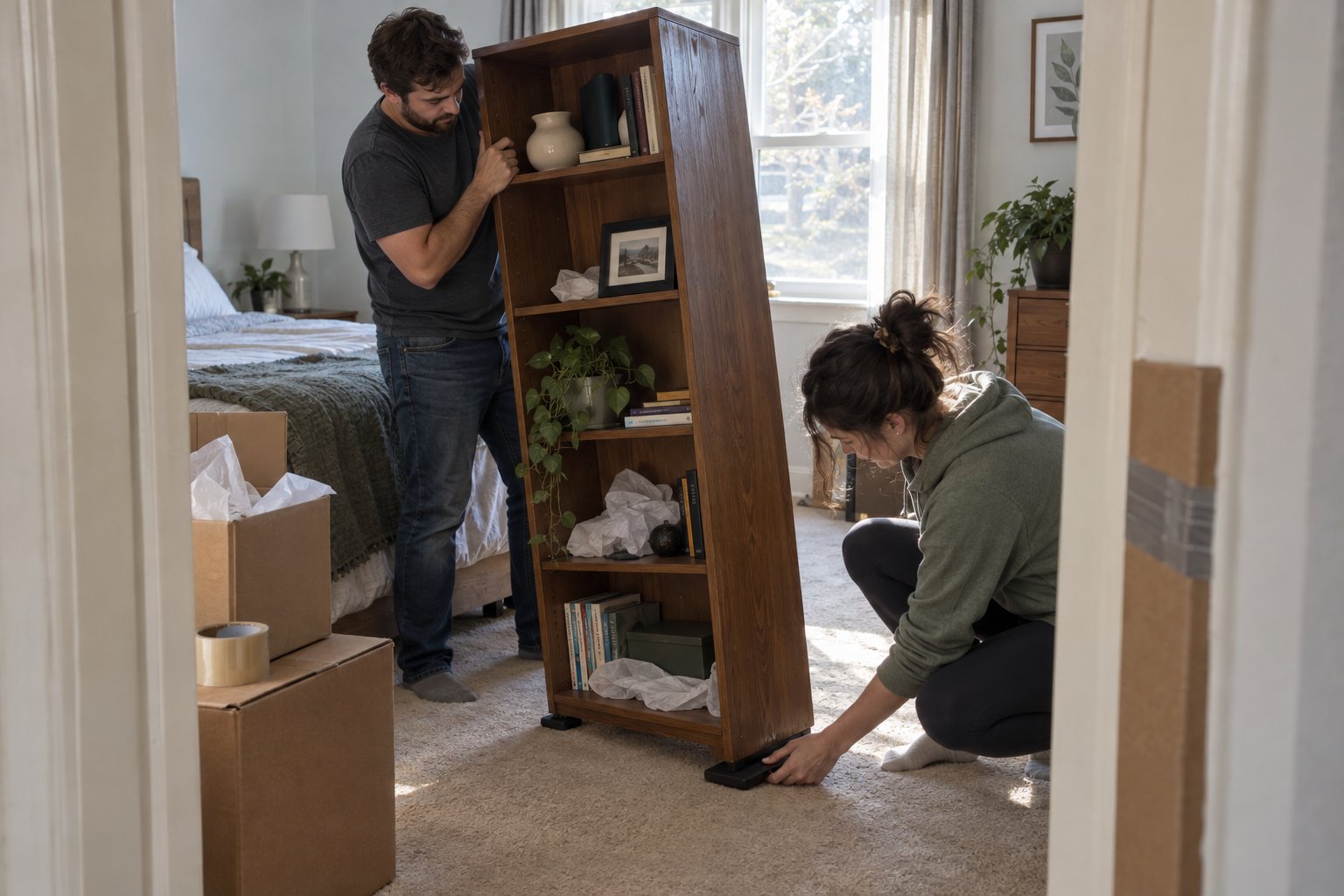
- Furniture that needs disassembly: flag beds, large tables, or anything with removable legs so the crew knows what to take apart rather than discovering it mid-load.
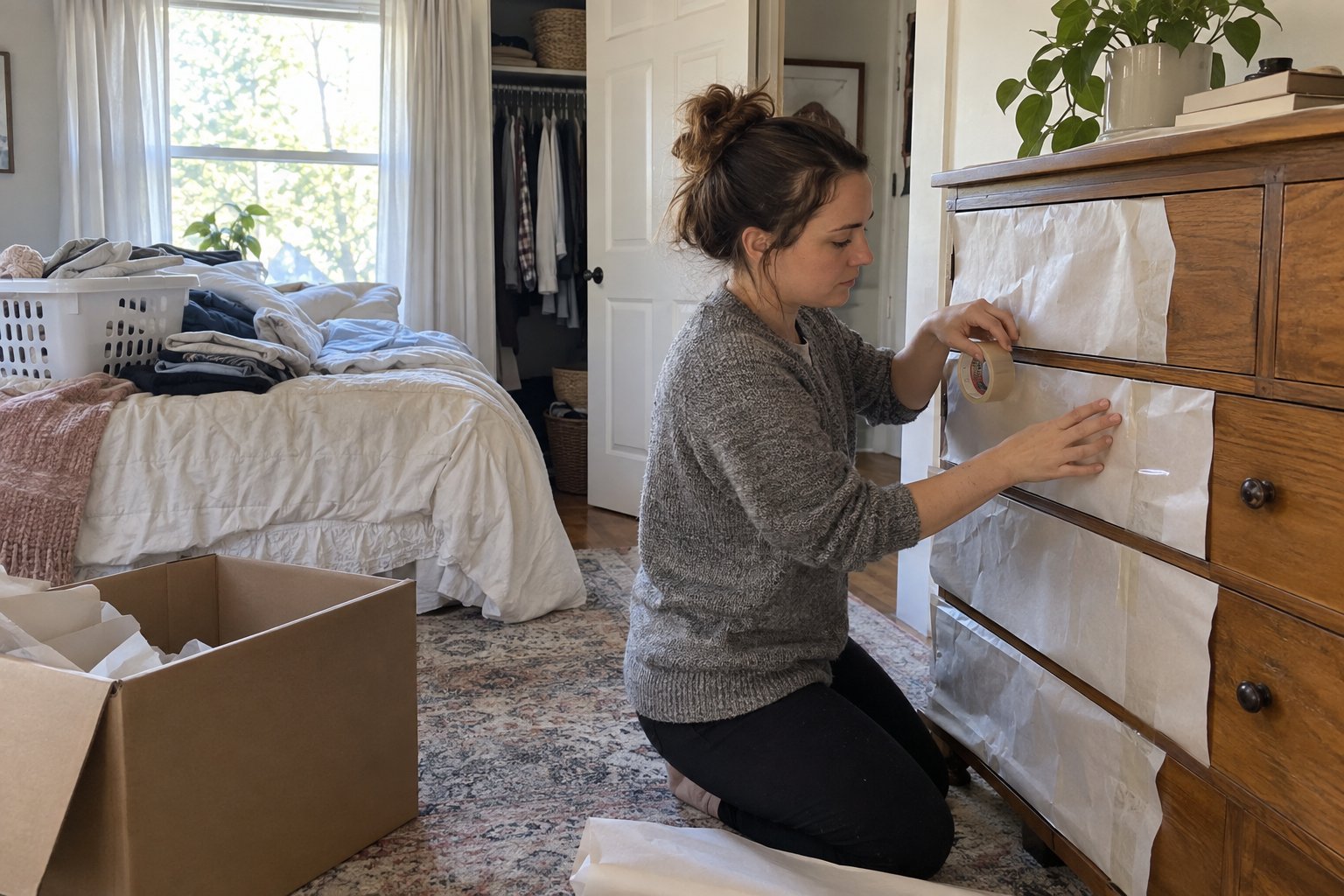
- Floors and walls: move anything fragile off walls near the path furniture will travel, since a bumped frame or mirror is one of the most common accidental casualties of moving day.
- Parking: reserve space for the truck as close to the entrance as possible, and let neighbors know if a cone or sign will be out that morning.
What happens during loading, and what do you need to do?
Once the crew starts, your main job shifts from prepping to answering questions and staying out of the flow of traffic. A good crew will ask about anything unclear rather than guess, but only if you're available to answer.
Walk the lead mover through the home before boxes start moving, pointing out anything fragile, anything that needs to be taken apart, and anything that is not going. This single walk-through prevents more mix-ups than any label ever will. If your home has stairs, narrow doorways, or tight parking, mention it here too rather than letting the crew discover it on the first trip.
Keep your essentials bag, your phone, and any paperwork with you rather than setting them down where they could get boxed up by mistake. It happens more often than people expect, especially with anything left on a kitchen counter or coffee table.
What should you do after the truck is loaded?
After the last item is loaded, do a final walk-through of every room, every closet, and every cabinet before the crew pulls away. This is your last chance to catch anything left behind, and it takes only a few minutes.
Check behind doors, inside washers and dryers, on closet shelves, and in the garage or any outdoor storage. Confirm the crew has your correct new address and a working phone number for you, and confirm what time they expect to arrive at the destination. If you're moving a longer distance, ask roughly how long the drive will take so you can plan your own travel and arrival around it rather than beating the truck there with nowhere to unload.
As a rule of thumb, allow about half a day for loading an average three-bedroom home and another half day for unloading, though a larger home or a tricky layout can push either side longer.
Moving day checklist for arrival at your new place
Arriving before the truck gives you time to do a few things that make unloading faster: confirm utilities are on, do a quick walk-through for existing damage, and decide where large furniture will go in each room. Having a plan before boxes start coming off the truck means the crew sets things down once instead of moving them twice.
Tape a simple label or sign on each room's door so boxes and furniture land in the right place without you directing every single item. Keep that essentials bag with you until you've confirmed the bed is set up and the bathroom is usable, since those are the two things people scramble for first on the first night.
If you haven't already, this is also the point to file your change of address with USPS if you haven't done so ahead of time, since mail forwarding takes a few days to activate and the sooner it's in motion, the fewer pieces of mail go to the old address.
Does this change for a local move versus a longer one?
The core checklist stays the same whether you're moving across town or across the state, but a longer move adds a few extra steps around timing. For a local move within a short driving distance, the crew can often load and unload the same day, which simplifies planning around arrival. For a longer long-distance move, build in a buffer day between loading and your expected delivery window, since drive time and routing can shift the schedule.
If you're moving between a home and an office, or handling a mixed load, read through our guide on DIY moving vs hiring movers for loading and unloading to see how much of the lifting you want to take on yourself versus hand off to a crew.
A simple rule of thumb for timing moving day
As a general approximation, plan on roughly an hour of prep time per room the morning of the move if you're doing any last-minute packing, and build your schedule backward from your crew's arrival time using that math. A four-bedroom home with a full kitchen and garage will run longer than a one-bedroom apartment, so adjust accordingly rather than treating every move as identical.
Planning your move? Request a quote from Destination Moving.